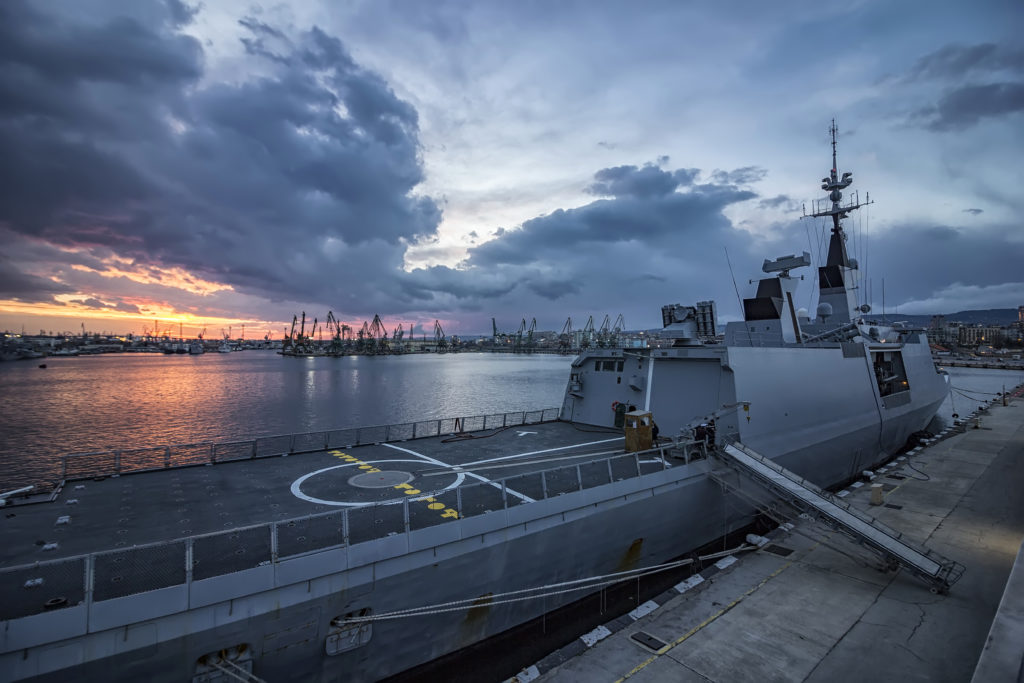
The modern naval landscape is defined by a race against time and complexity. As geopolitical tensions rise, the ability to rapidly scale production capacity has become a cornerstone of national security.
Traditional shipyards, however, are often constrained by legacy fabrication methods that prioritize manual labor over process consistency and throughput in modern shipbuilding manufacturing environments.
To maintain maritime superiority, the defense industrial base must modernize how naval structures are formed, assembled and moved through production.
Advanced hydraulic forming technologies — including hydroforming, deep draw forming, and automated press systems — are becoming a critical part of that transition.
These systems allow manufacturers to produce large, complex marine components with greater repeatability, structural consistency, and production efficiency than traditional fabrication approaches.
The challenge isn’t simply building more ships. It’s building them with enough process stability to sustain output under pressure.
That’s where many production environments begin to break down.
“Modern naval production doesn’t fail because of a lack of effort,” says Kevin Fernandes, President of Macrodyne Technologies. “It fails when disconnected systems, manual workarounds and process variation start compounding across the line.”
The Naval Production Bottleneck
For decades, naval and shipbuilding manufacturing operations have relied heavily on cutting, welding, bending, and labor-intensive assembly processes. While effective, these traditional methods introduce variability, increase labor dependency and slow production throughput, especially as vessel geometries become more complex.
Modern hydraulic forming systems change that equation.
Instead of relying on multiple fabrication and joining stages, advanced forming technologies allow manufacturers to produce high-precision, near-net-shape components directly from raw plate or sheet material.
In many shipyards, welding and downstream correction have quietly become accepted as part of the process. But every additional weld, adjustment, or secondary operation introduces opportunities for things to go wrong.
High-throughput naval manufacturing demands something different: forming systems engineered for repeatability at scale.
Depending on the application, this may involve hydroforming for complex geometries, heavy plate forming for structural sections, dishing operations for marine components, or automated deep draw systems for high-strength naval materials.
The objective remains the same: fewer downstream corrections and a more stable production flow.
The Geopolitical Urgency of Naval Readiness
The current geopolitical environment demands a rapid scaling of the maritime industrial base. We just don’t have the luxury of long lead times.
And yet many production environments are still operating with manufacturing strategies built for peacetime throughput. Defense readiness now depends on industrial responsiveness, not just installed capacity.
“You can’t surge production effectively if every forming operation depends on tribal knowledge and manual correction,” says Jeffrey Walsh, Director of Business Development with Macrodyne Technologies. “The process itself has to become more predictable.”
The strategic need for surge capacity means that manufacturers must modernize their shop floors to handle higher throughput without sacrificing precision.
Automated hydraulic forming provides the foundation for this agility, allowing shipyards to shift from a steady-state maintenance posture to a high-velocity production model. This transition is essential for ensuring that the fleet remains not only well-maintained but capable of rapid expansion when national interests are at stake.
From Manual Fabrication to Automated Forming Systems
The evolution from manual, single-operator presses to fully integrated automated forming systems is becoming a defining characteristic of modern shipbuilding manufacturing.
These systems combine hydraulic presses, robotic material handling, automated loading and unloading, real-time controls, and digitally monitored forming cycles into one coordinated production environment.
That integration matters a lot more than most people realize.
The real advantage of automation isn’t simply replacing labor. It’s reducing inconsistency between cycles, shifts, operators, and forming operations.
By integrating automated handling and forming technologies together, shipyards can maintain a continuous production rhythm.
Solving the Problem of Springback in Heavy-Duty Components
One of the most persistent challenges in heavy forming operations is springback — the tendency of material to partially return toward its original shape after force is removed.
This becomes especially problematic when working with high-strength steels, titanium alloys, or thick marine-grade materials used throughout naval manufacturing.
Modern hydraulic forming systems address this challenge through highly controlled pressure curves, force application, and dwell timing during the forming cycle.
Instead of forcing material into shape and correcting problems afterward, the process is engineered to stabilize material behavior during forming itself.
That level of control becomes increasingly important as naval programs move toward tighter tolerances, higher-strength materials, and faster production expectations.
Parts that “almost” hold geometry create downstream assembly problems that compound quickly at scale.
Structural Integrity Where It Matters
Naval engineering requires an uncompromising balance between structural strength, durability, manufacturability and weight control.
Advanced hydraulic forming technologies allow manufacturers to optimize structural performance while reducing unnecessary assembly complexity, secondary operations, and material waste.
In many applications, this enables the production of larger monolithic structures with fewer welded sections, improved geometric consistency, and more predictable long-term performance.
This is where modern forming systems begin to outperform traditional fabrication philosophies.
Instead of fighting distortion, variability and stress after forming, the process is designed to control material behavior during forming.
There’s a significant difference between those two approaches.
The Advantage of Monolithic Designs
Welds remain one of the most heavily scrutinized areas in marine structures. They introduce potential fatigue points, increase inspection requirements, and create long-term maintenance considerations throughout the vessel lifecycle.
Modern forming systems allow manufacturers to reduce reliance on large multi-piece assemblies by producing larger, more integrated formed structures directly off the press.
The fewer opportunities there are for distortion, fatigue initiation, or fit-up variation, the more resilient the platform becomes over its operational life.
“Every weld removed from a structure is one less variable the shipyard has to manage for the next thirty years,” says Fernandes.
The Role of Shipbuilding Presses in Modern Naval Manufacturing
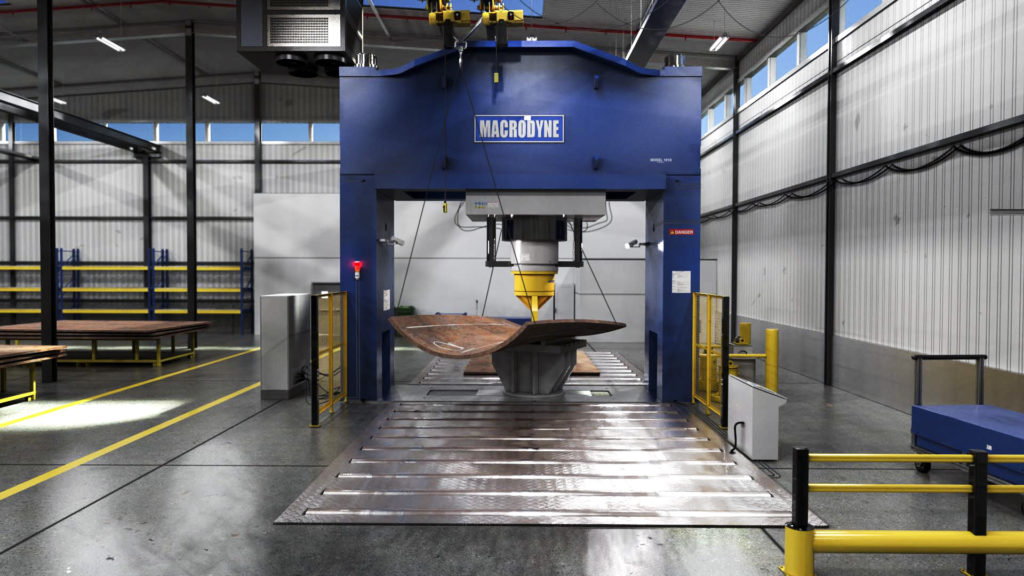
Modern naval production and shipbuilding manufacturing increasingly depend on large-scale forming equipment capable of handling oversized plates, structural reinforcements, curved geometries, and high-strength marine materials with repeatable precision.
This is where shipbuilding presses become critical.
Hydraulic and servo-hydraulic press systems are used throughout naval manufacturing operations to form hull plates, bulkheads, stiffeners, reinforcement structures, tank ends, propulsion components, and other heavy marine assemblies.
Depending on the application, these systems may include:
- dishing presses
- stretch forming presses
- deep draw presses
- forging presses
- heavy-duty straightening presses
The shift isn’t simply toward bigger presses.
It’s toward more controlled forming systems capable of producing repeatable geometry across extremely large workpieces without introducing unnecessary distortion, instability, or downstream rework.
In many naval applications, forming accuracy directly impacts final assembly efficiency. Variability in curved panels, hull sections, or reinforcement structures creates cascading fit-up issues that slow production and increase labor dependency later in the process.
“A lot of shipyards are still compensating downstream for problems introduced upstream during forming,” says Jeffrey Walsh, Director of Business Development with Macrodyne Technologies. “Modern press systems help stabilize that entire process.”
Increasingly, these presses are also being integrated directly into automated handling, controls, and digitally connected production environments — transforming shipbuilding from a labor-heavy fabrication model into a more controlled manufacturing system.
Automation as a Strategic Asset
Accelerating Production Flow with Robotic Arms and Material Handling
The integration of robotic material handling transforms the hydraulic press from a standalone tool into a dynamic asset within the production flow. Robotic systems can precisely position large, cumbersome sheets of stainless steel or titanium, ensuring that the orientation is perfect every time. This precision, coupled with the speed of automation, eliminates human error and drastically reduces the cycle time, turning hours of manual labor into minutes of high-precision machine time.
In shipbuilding environments, this can mean the difference between manually correcting large hull sections for hours, or producing repeatable geometry directly off the press.
And importantly, automation only delivers its full value when the press, controls, tooling interfaces, and material handling are engineered as one coordinated system, not assembled from disconnected suppliers after procurement.
Minimizing Downtime through Quick Die Change Systems
Efficiency is defined by how quickly a press can transition between different component geometries. Modern hydraulic presses equipped with quick die change (QDC) systems allow manufacturers to adapt to changing mission requirements in near real-time. By automating the alignment and clamping of dies, shipyards can maintain a diverse production line that creates everything from internal brackets to exterior panels without halting operations for extended maintenance or reconfiguration.
In high-mix defense manufacturing environments, flexibility is no longer a luxury feature. It’s becoming a core production requirement.
Programmable Logic Controllers (PLCs) and CNC Systems
At the heart of the modern press is the PLC and the CNC interface. These systems track every parameter of the forming cycle, such as pressure, velocity, and displacement, with millisecond accuracy.
By logging this data, manufacturers achieve a level of quality assurance that is non-negotiable for defense contracts. These systems serve as the “brain” of the operation, ensuring that every part that comes off the line matches the digital twin of the original engineering model.
That level of process visibility also changes how manufacturers troubleshoot problems. Instead of reacting after defects appear downstream, engineers can identify variation during the forming cycle itself.
Working with High-Performance Naval Materials
Forming Corrosion-Resistant Alloys: Titanium and Inconel
Naval environments are among the most corrosive on earth. Titanium and Inconel are standard materials for mission-critical components, yet they are notoriously difficult to form using traditional methods.
The controlled environment of a hydraulic press allows for the precision forming of these expensive, high-performance alloys.
By optimizing the fluid-pressure parameters, manufacturers can minimize the hardening effects of the forming process, ensuring that the final parts maintain their integrity under the extreme conditions of a deep-sea deployment.
These materials are unforgiving. Small inconsistencies in force application, dwell time, or material flow can quickly become expensive mistakes, especially when working with titanium or specialty naval alloys.
Precision Handling of Stainless Steel and High-Strength Steel Plates
Stainless steel and high-strength steel remain the workhorses of the shipbuilding industry. However, their yield strengths demand significantly higher force outputs. Automated hydraulic presses provide the sheer force required to manipulate these materials, while the fluid-pressure medium ensures that the material does not tear or wrinkle during the forming process. This allows for higher utilization rates of material, reducing waste and ensuring that expensive plate stock is turned into usable components with minimal scrap.
Reducing Secondary Operations and Waste
The goal of any high-efficiency shipyard is the achievement of “near-net shape” production. By moving from raw stock to a finished component in a single, automated press cycle, manufacturers eliminate the waste associated with trimming, machining, and secondary manual forming. This streamlined route not only saves time but also significantly reduces the consumption of energy and materials, creating a leaner and more sustainable industrial footprint.
There’s also a strategic advantage here that often gets overlooked: reducing dependency on secondary operations reduces production vulnerability. Fewer handoffs. Fewer bottlenecks. Fewer opportunities for delay.
Integrating 3D Laser Cutting and Punching in the Production Cycle
Modern hydraulic cells often integrate 3D laser cutting and automated punching systems. This allows for the production of parts with complex mounting points, drainage holes, and access ports in the same production stream as the main forming operation. By creating a fully integrated production cell, shipyards can ensure that the finished component is ready for immediate installation, further accelerating the timeline from factory floor to shipyard drydock.
Industry 4.0 and the Digital Shipyard
In a digital shipyard, every press cycle is a data point. The ability to monitor and record the precise pressure applied to every single component provides an unprecedented level of traceability. If a failure occurs in the field, engineers can verify the exact conditions under which a part was manufactured. This digital pedigree is essential for satisfying the rigorous quality assurance standards required by modern defense procurement, where documentation is as vital as the product itself.
The modern defense contractor is no longer just manufacturing parts. They’re manufacturing traceability, accountability, and repeatability alongside the component itself.
Predictive Maintenance in Hydraulic Press Machinery
Downtime is the enemy of productivity. Industry 4.0 applications allow for the implementation of predictive maintenance on all hydraulic press components. By monitoring vibration, fluid temperature, and pressure consistency, the control systems can predict failure before it occurs. This transition from “scheduled maintenance” to “condition-based maintenance” ensures that the production line remains active, supporting the constant throughput required for a high-velocity defense industrial base.
This is where the industry is clearly heading: presses that don’t simply produce parts, but continuously communicate operational health, process performance and maintenance risk in real time.
Lean Manufacturing: Scaling Capacity Without Increasing Footprint
Space in a shipyard is at a premium. Automated hydraulic cells provide the ability to scale output significantly without requiring massive increases in physical floor space. Because these cells are highly efficient and capable of running multi-shift operations with minimal human intervention, they effectively maximize the density of the production floor. This allows manufacturers to do more with less, optimizing existing infrastructure to meet evolving national security needs.
How to Choose Automated Machinery for Shipbuilding Manufacturing
Selecting automated machinery for shipbuilding manufacturing is no longer just a question of tonnage or machine size. Modern naval production environments require forming systems capable of balancing throughput, repeatability, material control, automation integration, and long-term operational reliability.
In many cases, the challenge is not simply whether a press can apply enough force. It’s whether the entire system — including controls, tooling interfaces, material handling, and production flow — can operate consistently under real manufacturing conditions.
That distinction becomes increasingly important in naval and defense applications where:
- oversized components
- high-strength materials
- tight assembly tolerances
- and multi-stage production flows
all introduce additional process complexity.
Shipyards evaluating automated forming equipment are increasingly prioritizing:
- repeatable geometry
- reduced downstream correction
- automation compatibility
- traceability
- quick changeover capability
- and long-term production stability
over raw machine specifications alone.
“The conversation has shifted from, ‘How big is the press?’ to, ‘How stable is the process?’” says Walsh. “The most effective automated manufacturing systems are engineered around the behavior of the process itself, not simply the maximum force output of the machine.”
The Economic Impact of Automated Scaling
Long-term Cost Savings in Material Usage and Labor
While the initial investment in automated hydraulic forming can be a tough pill to swallow, the long-term ROI is clear.
By reducing material waste, lowering the reliance on expensive manual labor, and eliminating the costs associated with secondary operations and rework, shipyards achieve significant per-part cost reductions.
Furthermore, the longevity of these components in the field — owing to their superior structural integrity — means that lifecycle costs for the fleet are drastically lowered, providing a measurable economic benefit that extends far beyond the initial procurement phase.
Conclusion
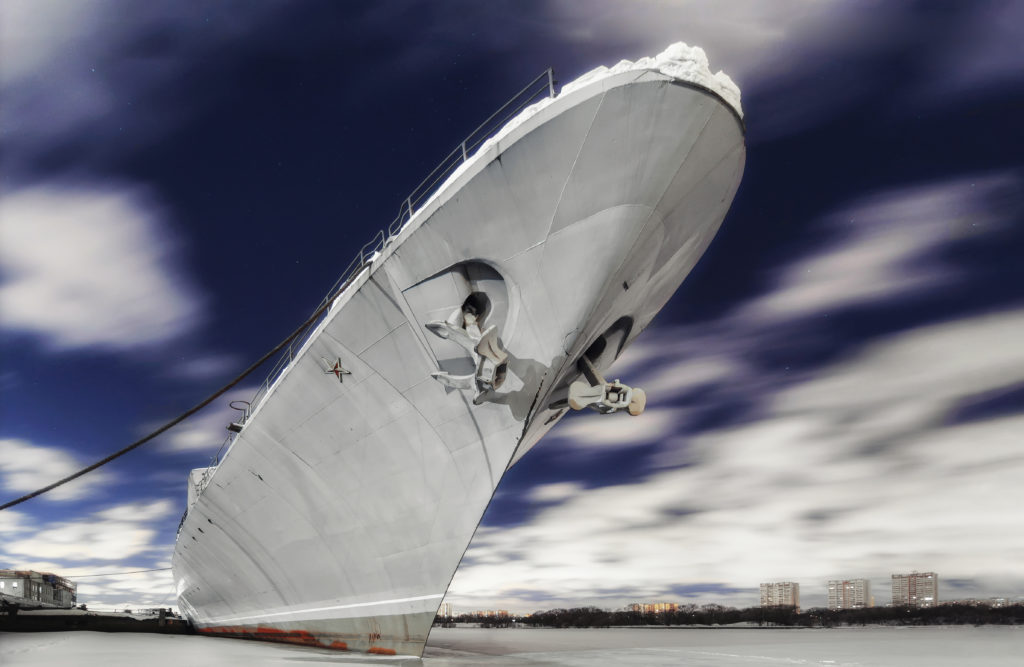
The future of naval and shipbuilding manufacturing will not be defined solely by shipyard size or installed capacity. It will be defined by how consistently production systems can operate under pressure.
Advanced hydraulic forming technologies are becoming a critical part of that evolution.
By integrating forming presses, automation, material handling, controls, and real-time production visibility into unified systems, manufacturers can reduce production bottlenecks while improving structural consistency, throughput, and long-term manufacturing resilience.
The shipyards that adapt fastest won’t simply build more vessels. They’ll build them with greater process stability, lower operational friction, and significantly more scalable production capability.
That’s the real force multiplier.
Not just tonnage. Not just automation. But production systems engineered to perform predictably under pressure.