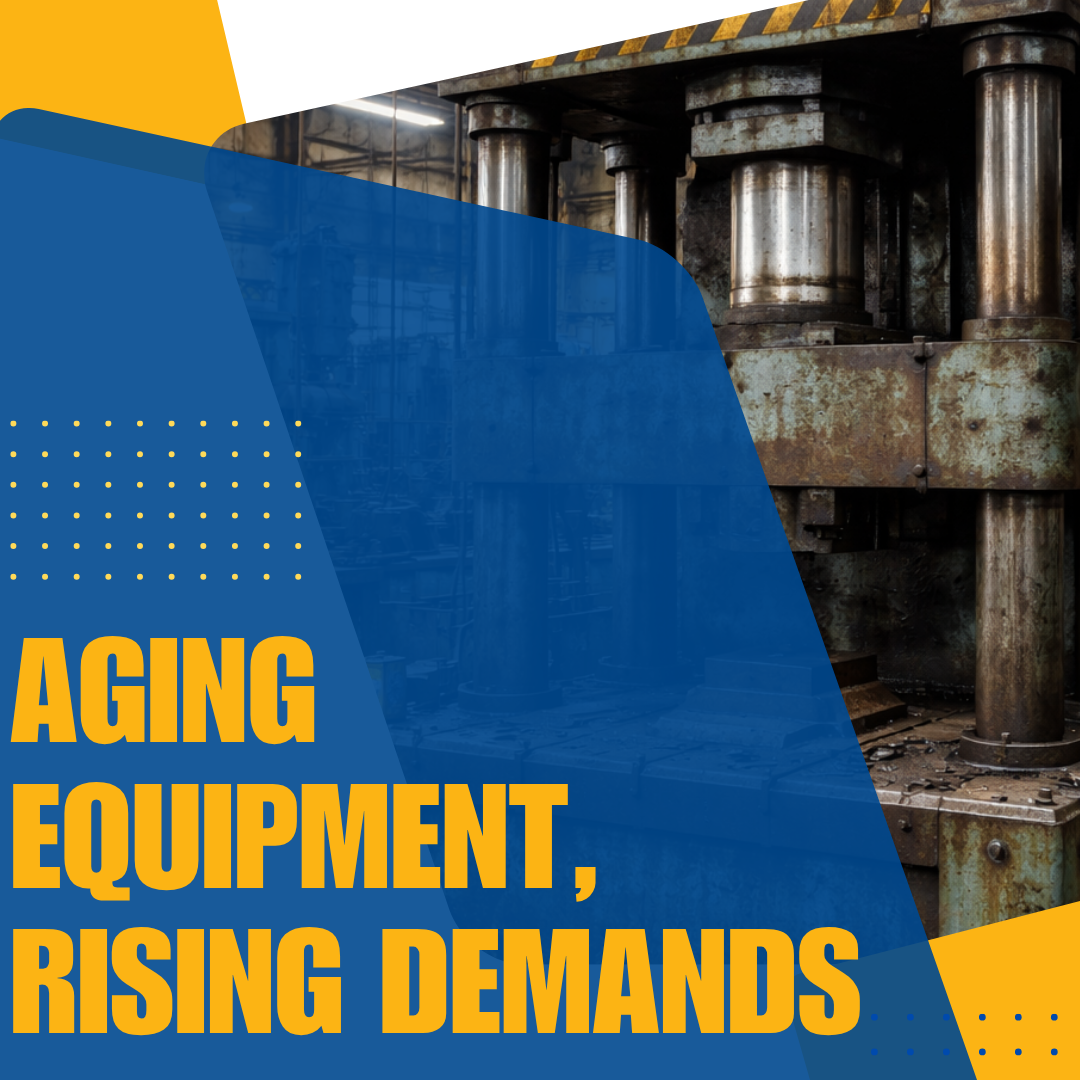

Manufacturing floors across America are filled with hydraulic presses that were once engineering milestones. Today, many of them struggle to keep pace with modern production demands.
These legacy hydraulic presses, often 20 to 30 years old, still represent major capital investments that manufacturers can’t simply walk away from.
Replacing the presses outright isn’t always realistic, even as expectations around throughput, quality, and reliability continue to rise. (Budgets, inconveniently, have not kept pace with expectations.)
What defines a legacy hydraulic press isn’t age alone. These machines were designed around different assumptions: manual controls, limited safety automation, and production philosophies where cycle times were measured in minutes, not seconds. Changeovers happened weekly. Data collection was optional. Downtime reduction was something maintenance worried about after the fact, not something management tracked before coffee.
Today, that gap is impossible to ignore. Many facilities are discovering that legacy presses fail modern demands, not because they’re broken, but because the world around them changed while they stayed exactly the same.
“Most legacy presses didn’t suddenly become bad machines,” says Kevin Fernandes, President of Macrodyne Technologies. “They just kept doing exactly what they were designed to do while the rest of manufacturing moved on.”
Did you know? The global hydraulic press market, valued at USD 20.02 billion in 2023, is projected to grow to USD 29.09 billion by 2031 at a CAGR of 4.78%, highlighting the ongoing demand amid modernization pressures.
Hydraulic Press Speed, Responsiveness & Cycle Times
One of the most visible pressure points is speed. Modern production demands shorter lead times, higher output, and consistent repeatability. That puts cycle times under a microscope. And older presses don’t love that kind of attention.
Most legacy hydraulic presses were designed to operate reliably at cycle times that just don’t align with current expectations. Where older systems may run 15 to 30 second cycles depending on tonnage and part geometry, modern operations often target 5 to 10 seconds for comparable work. The math here is not complicated, and it is not forgiving.
“We talk to a lot of manufacturers who say, ‘The press runs fine.’ What they usually mean is it runs fine as long as nothing changes and nothing ever changes anymore,” says Jeffrey Walsh, Director of Business Development with Macrodyne Technologies.
Hydraulic response plays a major role. Older valve technology and control logic limit how precisely pressure and motion can be shaped throughout the stroke. Acceleration and deceleration profiles tend to be conservative, extending overall cycle times and quietly reminding operators that “this is just how the press runs.”
Without modern sensing and feedback, optimization is largely manual. That makes consistent cycle times difficult to maintain under changing conditions, especially when tooling wears, material varies, or the operator who “knows the trick” is on vacation.
Maintenance Realities and Cost Exposure
As presses age, maintenance costs rise. Not dramatically all at once, but steadily, predictably, and usually at the worst possible moment.
Seals, pumps, and valves degrade faster under modern workloads. What was once acceptable wear becomes a recurring calendar item. Pump efficiency drops, run times increase, and energy consumption follows right along, whether anyone planned for it or not.
Parts availability adds another layer of complexity. OEM support for older platforms is often limited or gone entirely, forcing maintenance teams into custom rebuilds or creative sourcing. What used to be a standard replacement becomes a scavenger hunt with hefty invoices attached.
A targeted hydraulic press retrofit can change that equation. When done properly, it addresses controls, hydraulics, and sensing together, rather than playing whack-a-mole with symptoms. The result is more predictable performance and fewer conversations that start with “it should be running.”
Engineer’s Pause
Before You Push an Older Press Harder, Ask:
- Are current cycle times limited by hydraulics, controls, or operator intervention?
- How much variation is being managed manually instead of by the press?
- What data is unavailable during production? And who feels that first?
- Which workarounds disappear when the most experienced operator is off shift?

Integration Gaps in a Connected Factory
Modern factories are built around connectivity. Machines talk to systems. Systems talk to planners. Data gets logged, analyzed, and acted on…sometimes automatically.
Industry 4.0 integration is no longer a buzzword. It’s just how competitive shops operate.
Legacy hydraulic presses were never designed for this environment. They struggle with modern production in practical, frustrating ways: limited diagnostics, no native connectivity, and heavy reliance on operator intervention. Parameter changes that should take seconds take minutes. Feedback that should be automatic requires a clipboard.
These limitations don’t stay contained. One disconnected press can quietly slow an entire line, turning scheduling into guesswork and increasing exposure to unplanned downtime. Over time, aging presses stop being “reliable old workhorses” and start being the reason everyone builds extra buffer into the schedule.
Designed for This Era of Manufacturing
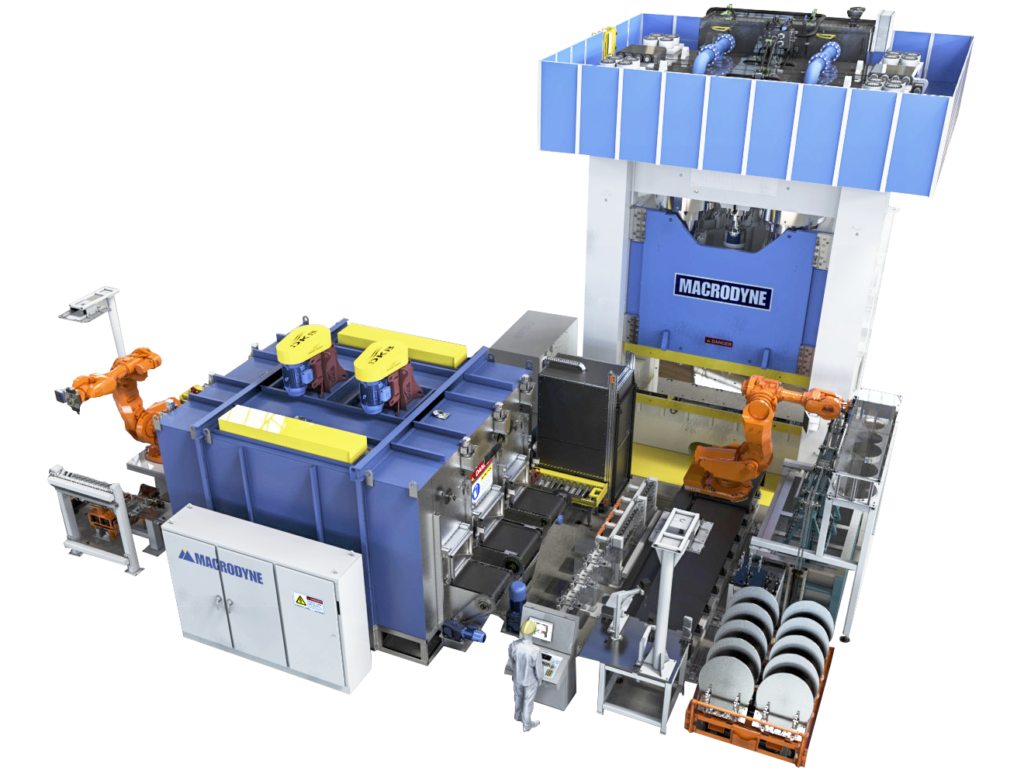
Modern hydraulic press systems are not retrofitted answers to old problems. They are designed from the ground up around how manufacturing actually operates today.
“Most legacy presses were engineered to last,” says Kevin Fernandes, President of Macrodyne Technologies. “Modern presses are engineered to adapt. That difference matters more now than it ever did.”
That means assuming shorter cycle times, frequent changeovers, tighter tolerances, and constant data flow. Motion control, force profiling, and diagnostics are integrated at the system level—not added later as workarounds.
Modern presses are built with the expectation that production requirements will shift. Tooling will change. Materials will vary. Automation will expand. Control architectures are designed to adapt without forcing operators or maintenance teams to compensate manually.
“If the press can’t tell you what it’s doing in real time, automation ends up guessing. Modern systems are designed so the data is there before you even ask for it,” says Hedley Hamilton, Automation Manager with Macrodyne.
Just as importantly, modern systems are engineered for visibility. Real-time feedback allows manufacturers to understand what the press is doing, why it’s doing it, and how small changes affect quality, throughput, and energy use.
In practical terms, this design philosophy translates into more stable processes, fewer surprises on the floor, and production capacity that scales with demand instead of fighting it.
“We don’t see customers upgrading because their old press stopped running,” says Jeffrey Walsh, Director of Business Development with Macrodyne. “We see them upgrading because it stopped keeping up.”
What This Looks Like on the Floor
In practice, outdated hydraulic systems show up as lost hours, inconsistent quality, and constrained flexibility.
Automotive suppliers lose time to manual adjustments that newer competitors eliminated years ago. Electronics manufacturers watch rejection rates climb when pressure control can’t hold tight tolerances. Aerospace shops discover that thermal and forming limitations turn “in-house capability” into “outsourced again.”
When manufacturers struggle with modern production demands, the consequences extend beyond scrap and overtime. Contracts get harder to win. Margins tighten. Explanations start to sound repetitive.
What Modern Hydraulic Presses Are Built to Do
Modern hydraulic press systems are designed around today’s production reality, not adapted to it after the fact. They’re built to deliver predictable force, repeatable motion, and data visibility across every part of the stroke.
Unlike older platforms, modern presses are engineered with cycle time optimization, energy efficiency, and automation integration as core design principles. Motion profiles are programmable. Force application is monitored in real time. Diagnostics are built in, not bolted on.
The result isn’t just faster presses. It’s more stable processes, lower variability, and fewer surprises on the floor.
Clearing Up Common Assumptions
Many common hydraulic press problems are written off as “normal.” Leaks. Pressure drift. Inconsistent cycle times. All familiar. All manageable, until they aren’t.
These issues quietly drive energy consumption higher and reliability lower. Another popular assumption is that older machines are cheaper to own. Individual parts may be less expensive, but cumulative maintenance costs, lost throughput, and extended downtime tend to disagree.
Perhaps the most persistent myth is that legacy systems can be modernized indefinitely, one upgrade at a time. In practice, mismatched components often create new constraints, just with newer part numbers.
Where This Leaves Manufacturers
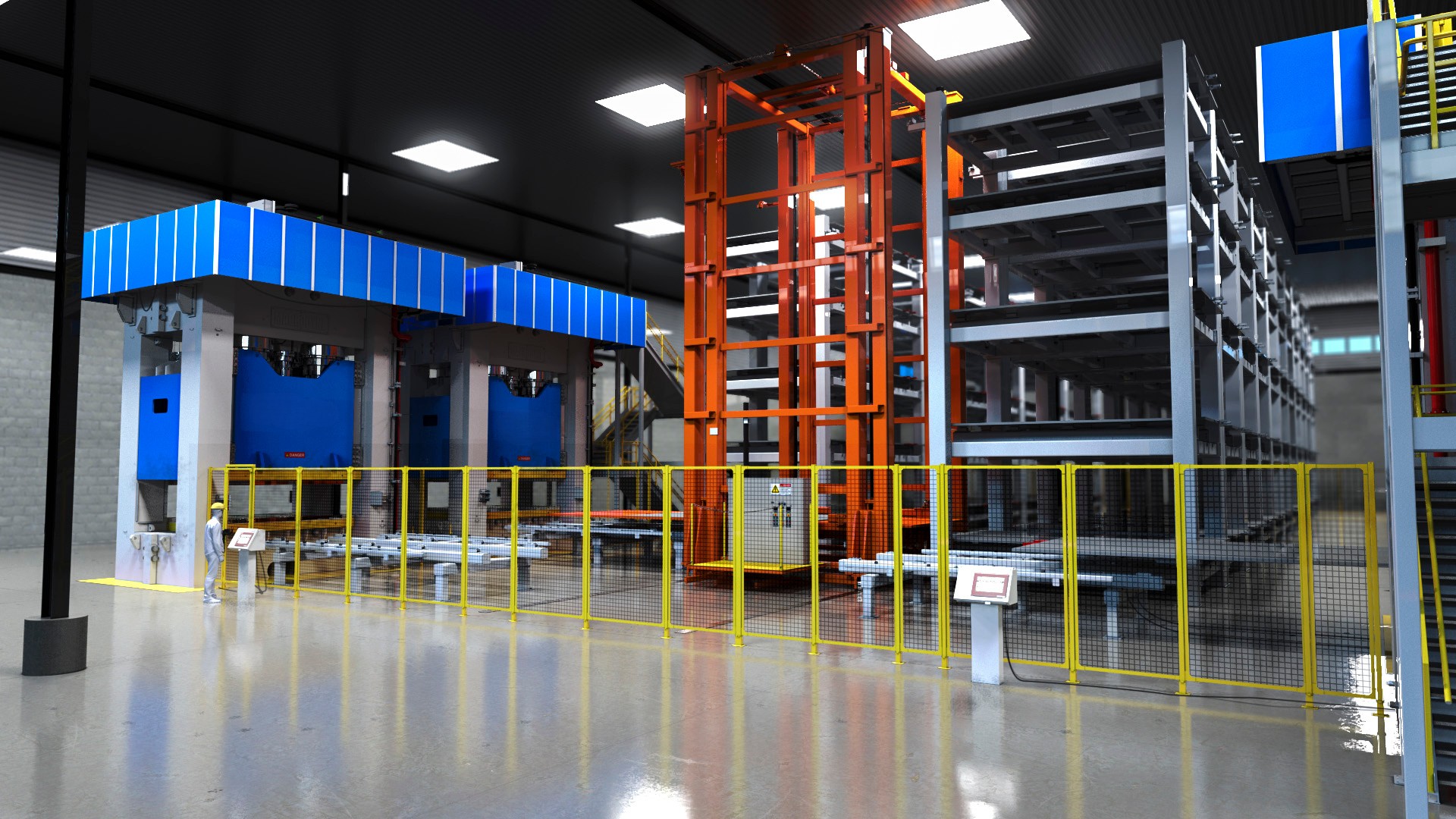
Legacy hydraulic presses sit at a strategic crossroads. They still run. They still make parts. They also increasingly define the ceiling of what a facility can realistically achieve.
For Made in USA manufacturing, the implications are sharper. Global competition leaves little margin for inefficiency. When maintenance costs creep up and responsiveness lags, competitiveness erodes quietly, usually without a dramatic failure to point to.
The question isn’t whether aging presses still work. It’s whether they support where the business needs to go next. Some can be modernized intelligently. Others can’t.
The difference shows up in data, not optimism.
“Legacy presses still make parts,” says Walsh. “The question is whether they still support the business.”
Press manufacturers who design and build systems today are solving different problems than they were 30 years ago. The focus has shifted from raw tonnage to controllability, integration, and lifecycle performance, areas where modern press engineering makes the biggest difference.
Modern hydraulic press systems aren’t about chasing technology. They’re about building production capacity that can adapt, scale, and compete under real-world conditions.