Sourcing a shipyard portal press, high-tonnage gantry press, or large hydraulic system for ship hull plate processing is not a routine equipment purchase. It’s the kind of capital project that changes how steel moves through a yard, how safely crews can work around heavy plate, and how reliably production can keep pace once the line is live.
But in modern shipbuilding, the press itself is only one part of the equation.
A heavy-duty press can have all the tonnage, stroke, daylight, and structural strength in the world, but if the system around it cannot move large steel plates efficiently, the entire operation slows down. For shipyards forming heavy hull plates, deck structures, bulkheads, and other large fabricated components, the biggest production constraint is often not pressing force. It is handling.
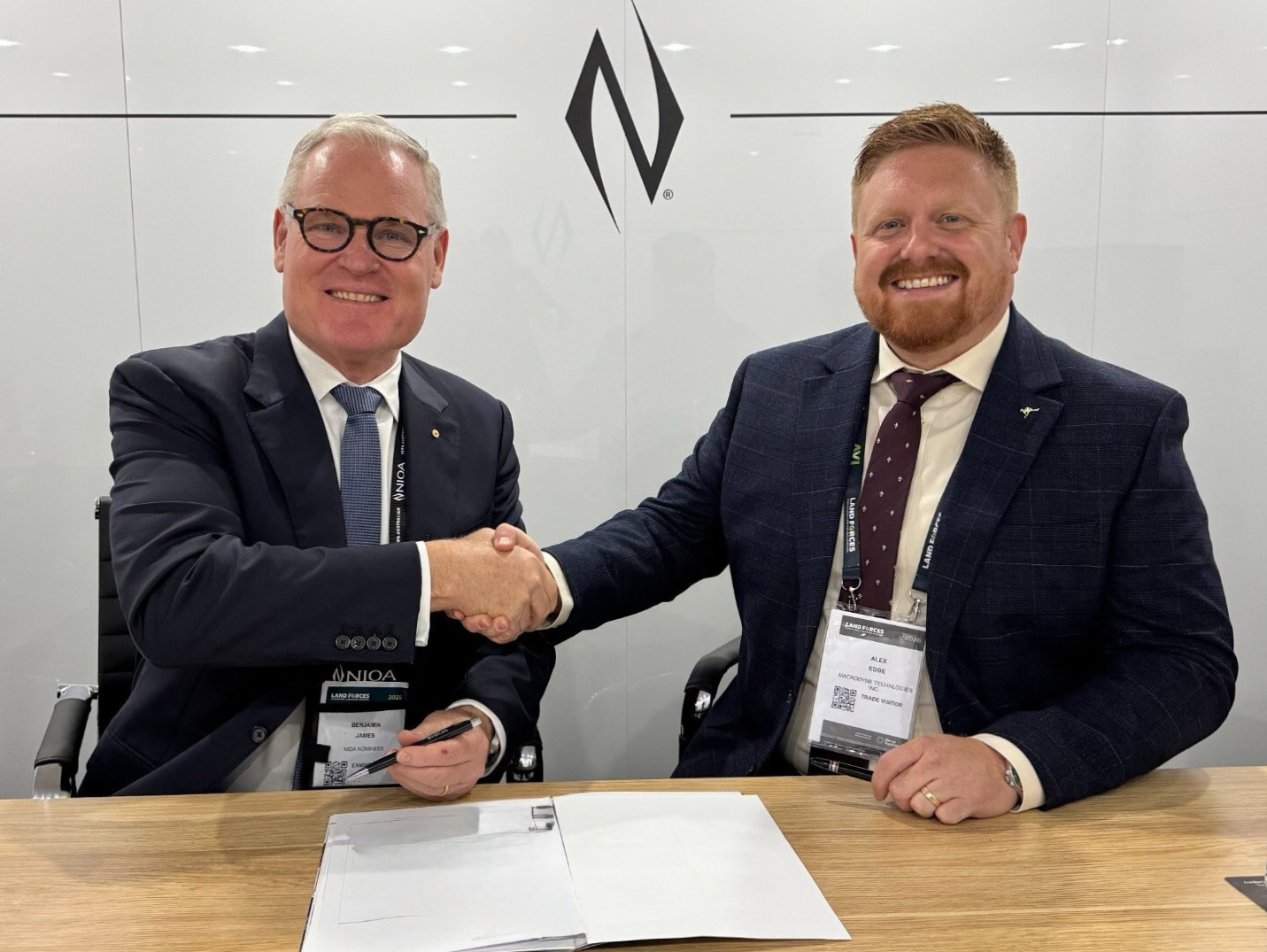
“A press can be engineered beautifully, but if the shipyard is still fighting the handling process around it, production will feel that immediately,” says Alex Edge, Macrodyne Director of Business Development, Europe. “The real value comes when the press and material movement are designed as one system.”
When 20-ton steel plates are still being wrestled into position manually, the bottleneck is not hard to find. Plates wait. Operators wait. The press waits. And with every delay, the business case behind the investment starts to weaken.
That is why more shipyards and maritime fabricators are looking beyond standalone machinery. Instead of sourcing a press from one supplier, automation from another, controls from another, and installation support from whoever is left standing, many are moving toward single-source, fully integrated press cells designed around the realities of heavy plate fabrication.
For shipyard operations, that shift is not just about convenience. It’s about reducing risk. But equally, it’s protecting uptime and making sure the entire line works as one system from day one.
The Hidden Friction of Multi-Vendor Shipyard Layouts
Large shipyard equipment rarely fails because one component was not impressive enough on paper. More often, the problem is that the full system was never engineered as a system.
“Most problems don’t come from one machine being underbuilt,” says Jeffrey Walsh, Director of Business Development with Macrodyne Technologies. “They come from separate systems being forced to work together after the fact. For a shipyard, that can turn a strong equipment purchase into a difficult production problem.”
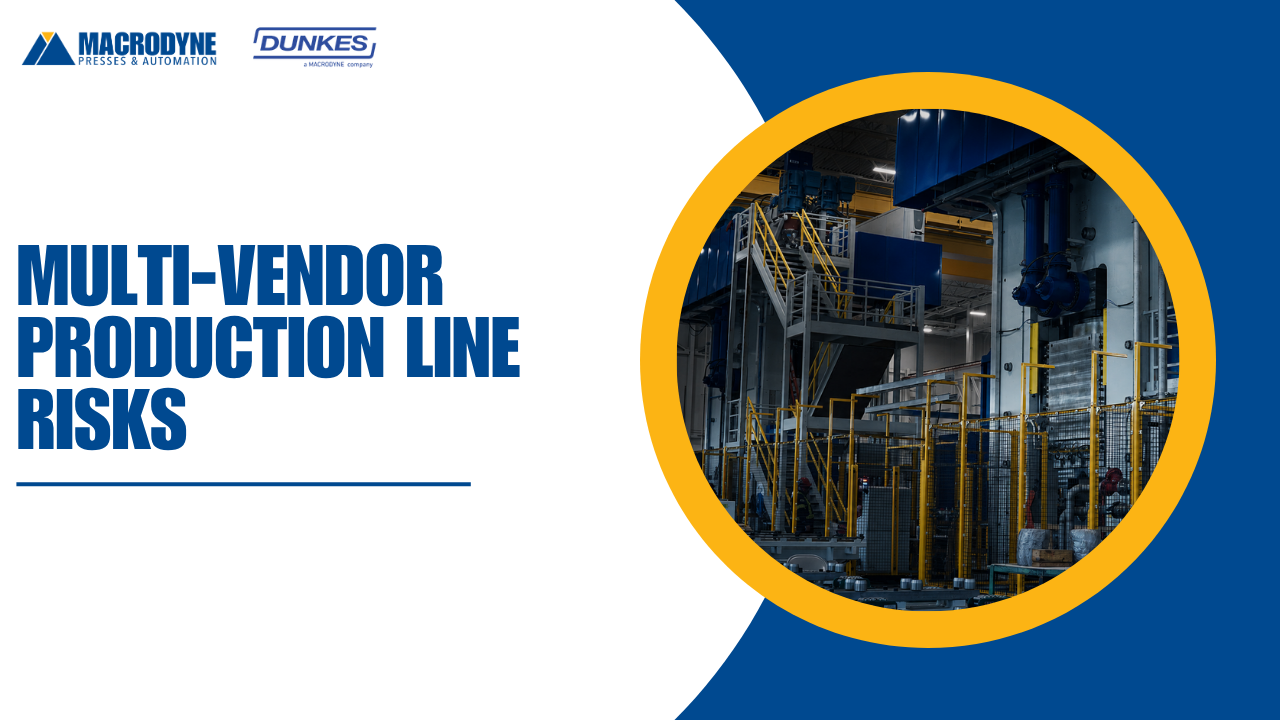
When a shipyard sources its hydraulic press from one manufacturer and its material handling, controls, cranes, safety systems, or automation from separate vendors, the project becomes more complicated pretty much immediately. While each supplier may be excellent at their own scope, that doesn’t automatically mean the equipment will work together cleanly on the production floor.
For structural hull fabrication, this matters.
Shipyard plate forming is not a light-duty, repeatable pick-and-place application. Large plates are heavy, difficult to maneuver, and often require careful positioning before forming. The press, handling equipment, tooling, safety zones, controls, and facility layout all need to work together with very little room for confusion.
In a multi-vendor setup, shipyards can run into issues such as:
- mismatched control logic between the press and handling equipment
- delays caused by unclear installation responsibilities
- automation systems that are not designed around the press cycle
- crane or manipulator movements that limit throughput
- safety systems that need additional rework after installation
- service questions that turn into vendor-to-vendor blame
That last point matters more than anyone likes to admit.
When a complex automated press line goes down, the shipyard does not need three suppliers debating where the problem started. It needs answers. Every hour spent troubleshooting across multiple vendors can mean delayed production, missed milestones, idle labor, and unnecessary cost.
In heavy fabrication environments, downtime is expensive and usually happens while everyone is standing around a very large piece of equipment that was supposed to make production easier.
Why the Press Cell Matters More Than the Press Alone
A heavy industrial press is often treated as the centerpiece of a shipyard forming operation, and in many ways, it is. But the real performance comes from the complete cell.
The press needs to be designed around the work being formed. The automation needs to be designed around the press. The controls need to understand both. The layout needs to respect the physical realities of the building, the operators, the workflow, and the plates themselves.
This is where one-stop sourcing becomes valuable.
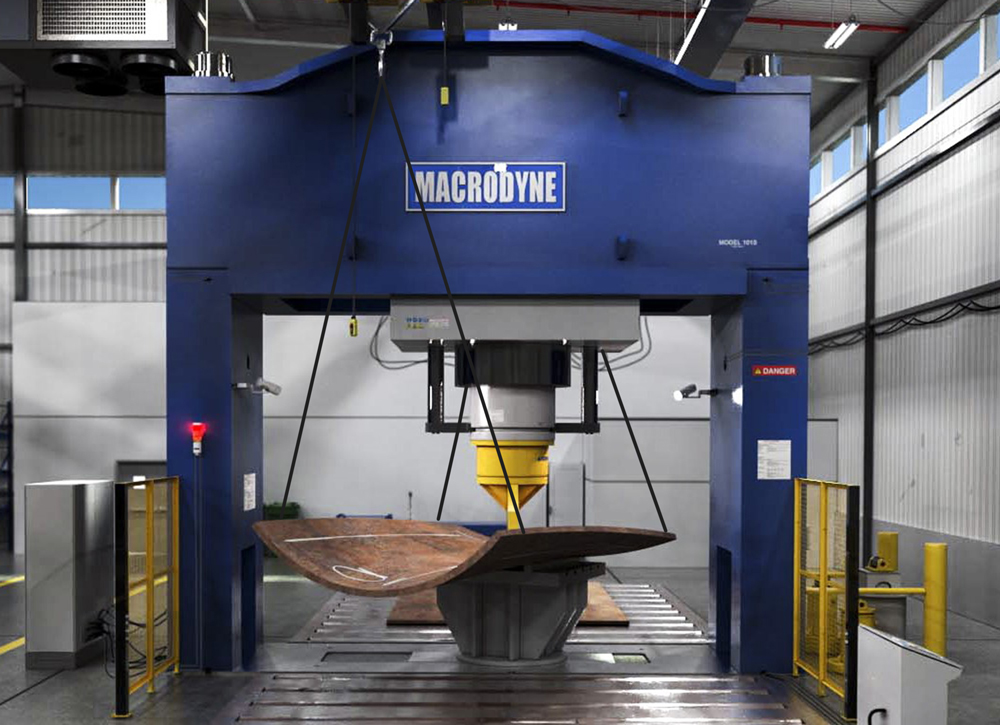
A fully integrated shipyard press cell can include the press, hydraulic system, controls, tooling interface, feed tables, plate manipulators, shuttle systems, safety guarding, operator stations, and related automation. When these elements are engineered together, the line becomes easier to operate and easier to support.
For shipyards, that can make the difference between buying equipment and building a reliable production asset.
The Macrodyne Approach to Integrated Shipyard Press Systems
Macrodyne designs and manufactures custom hydraulic presses and automated press lines for demanding industrial applications, including shipbuilding, defense, aerospace, rail, and heavy fabrication.
For shipyard plate forming, that experience matters because the work is large, heavy and unforgiving. These are not catalogue machines dropped into a standard layout. A shipyard portal press or high-tonnage gantry press needs to be engineered around the facility, the material, the forming process, and the production targets.
“Shipyard plate forming is not a standard machine application,” says Edge. “The equipment has to be designed around the way material moves through the facility, the size of the plates, and the realities of production. If that thinking does not happen early, the project gets harder than it needs to be.”
Macrodyne supports that work by bringing press engineering, hydraulics, controls, automation, and project execution under one roof.
That single-source structure helps shipyards reduce the risk that often comes with large equipment integration. Instead of trying to force separate systems to communicate after the fact, Macrodyne can design the press and automation together from the beginning.
That means the forming process, material movement, safety requirements, and control architecture are considered as part of one complete solution.
Automated Plate Handling Changes the Economics
In shipyard environments, material handling is often where time quietly disappears.
Large steel plates need to be lifted, rotated, positioned, formed, removed, and moved to the next operation. If that process depends heavily on manual coordination, overhead crane availability, or slow repositioning, the press can only move as fast as the handling process allows.
Automated plate handling helps change that equation.
By integrating feed tables, manipulators, gantry systems, or other handling equipment directly into the press cell, shipyards can reduce manual intervention and improve production flow. The goal is not automation for the sake of automation. The goal is to keep the forming process moving safely and predictably.
For shipyards, this can support:
- faster plate loading and unloading
- more consistent positioning before forming
- reduced reliance on manual rigging
- improved operator safety
- less idle time between press cycles
- better coordination between forming and downstream operations
It also helps keep people out of higher-risk areas. When operators are working around heavy plates, large presses, and suspended loads, safety is not a side benefit. It is part of the business case.
A well-designed automated cell can reduce the need for personnel to work inside the drop zone or manually guide large plates into position. That protects workers while also improving consistency.
Not exactly a minor detail when the material being moved weighs as much as a small house.
Synchronized Systems Reduce Wasted Time
One of the biggest advantages of an integrated press cell is synchronized control.
When the press, handling equipment, and automation are designed together, the system can be timed around the actual production sequence. The next plate can be staged while the press completes its cycle. Handling equipment can move in coordination with the press opening. Operators can monitor the full process from a more controlled and centralized interface.
This is especially important in ship hull plate processing, where parts are large, cycle times matter, and production delays can ripple across the yard.
A standalone press may perform well during a test run. But if the operator team has to wait for crane availability, manually reposition plates, or coordinate several disconnected systems, the real-world throughput may fall short of expectations.
Integrated systems reduce those gaps.
They also make the line easier to understand. Instead of managing separate machines with separate controls and separate support teams, the shipyard works with a unified system designed around the same operating logic.
One Engineering Team. One Project Scope. One Number to Call.
For capital equipment projects, accountability matters.
A shipyard press line is too important to become a coordination exercise between disconnected suppliers. When multiple vendors are involved, even simple questions can become complicated.
Who owns the controls interface?
Who is responsible for cycle timing?
Who confirms the safety integration?
Who solves the issue if the press and automation are not communicating properly?
Who supports the line after installation?
With a single-source supplier, those questions become much easier to answer.
Macrodyne’s model gives shipyards one engineering team, one project scope, and one point of accountability. From early concept development through press manufacturing, automation integration, installation support, and service, the project is managed as a complete system.
That matters before the equipment ships. It matters during installation. And it matters when the shipyard needs technical support, upgrades, or process improvements.
De-Risking the Capital Project Before it Reaches the Floor
A shipyard press investment is not just a machinery purchase. It is a production commitment.
The equipment needs to fit the building. It needs to fit the workflow. It needs to support the materials being formed today and leave room for future production needs. It needs to be safe, serviceable and practical for the operators who will use it every day.
That is why early engineering is so important.
A one-stop sourcing model allows the press, automation, hydraulics, controls, and facility layout to be considered together before installation begins. Potential problems can be identified earlier, when they are still drawings, simulations, and layout decisions, not expensive surprises on the shop floor.
For shipyards expanding capacity or modernizing existing plate fabrication operations, this can help reduce:
- integration delays
- installation rework
- controls issues
- handling inefficiencies
- vendor coordination problems
- avoidable downtime after commissioning
In other words, it helps protect the project from the kind of friction that rarely appears in the original quote but somehow always finds its way into the final cost.
Building Better Shipyard Plate Fabrication Systems
Tomorrow’s vessels will continue to place heavy demands on shipyard production teams. Fabricators need equipment that can support precision, repeatability, safety and throughput without adding unnecessary complexity to the floor.
That is where single-source turnkey press solutions become especially valuable.
By integrating the press, automation, controls, hydraulics, and material handling into one coordinated system, shipyards can move away from fragmented equipment sourcing and toward a more reliable production model.
Macrodyne helps shipyards build press systems around the full process, not just the machine. For large-scale shipbuilding applications, that difference can have a major impact on uptime, throughput, and long-term return on investment.
Because in shipyard plate fabrication, the press matters. But the system around it is what keeps production moving.