
On paper, forging press selection looks straightforward. Calculate tonnage. Choose a frame size. Confirm stroke and bed dimensions. Move on.
In production, it rarely works that way.
The wrong forging press specification doesn’t usually stop production outright. It erodes it. Gradually. Tool life shortens. Scrap creeps in. Operators start compensating for behaviors no one planned for. And the press, doing exactly what it was designed to do, gets blamed anyway.
Understanding how to specify forging press equipment means looking beyond peak force ratings and brochure numbers. It means evaluating how the press will behave under real forming conditions, with real materials, real dies, and real production pressure.
This process extends well beyond raw force calculations. Energy efficiency, maintenance access, safety compliance, and automation readiness all shape whether a forging press becomes a long-term asset or an expensive workaround.
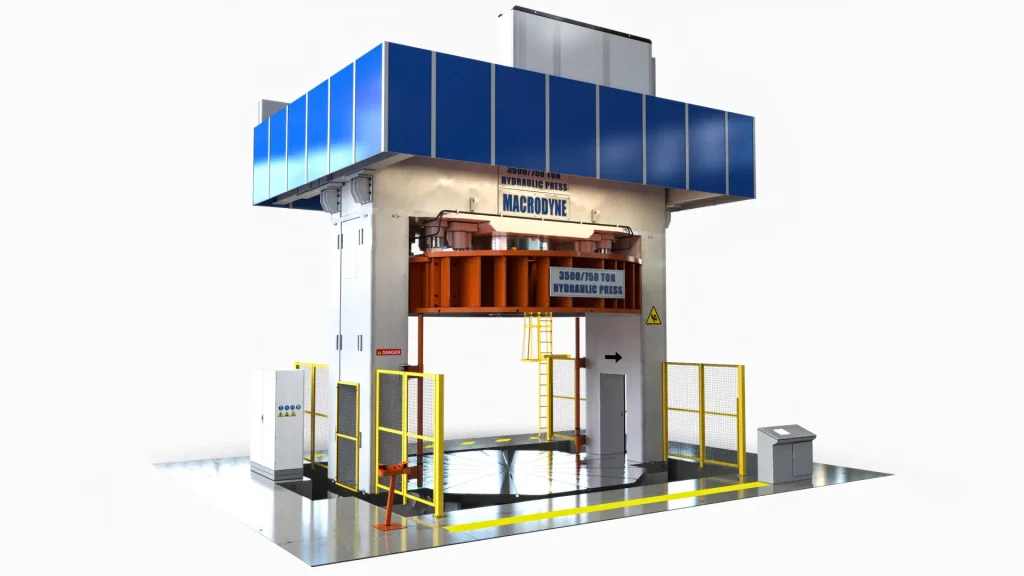
production conditions.
Technical Specification Considerations
Once part and process requirements are clear, technical specifications stop being abstract numbers and start becoming constraints that matter.
Tonnage capacity is only the entry point. Stroke length, working height, and bed dimensions must support how material actually flows through the die, not just how the part looks in CAD. In closed die forging, insufficient stroke prevents full cavity fill, while excessive speed can introduce flow instability that shows up later as dimensional variation or die wear.
Guidance accuracy is another quiet limiter. Poor alignment doesn’t usually fail dramatically; it erodes consistency over time. Tooling takes the blame. Scrap increases. The real issue is often the forging press itself.
And no specification exists in isolation. Maintenance access, plant layout, and automation interfaces frequently determine whether a press runs predictably or becomes a daily workaround. These details don’t show up on the nameplate, but they define how the press behaves in production.
Energy Efficiency and Environmental Impact
Energy use varies widely across forging press designs.
A mechanical press concentrates energy consumption during the forming stroke, while a hydraulic press may draw power continuously depending on system configuration. In high-volume press forging operations, this distinction has measurable cost and sustainability implications.
Thermal management is another factor. Excess heat reduces efficiency and increases wear, especially in hot forging environments. Engineers should evaluate how energy use scales with cycle time and load, not just nameplate ratings.
Efficiency isn’t about a single metric. A press that runs faster, with fewer stoppages and less rework, often outperforms a theoretically “more efficient” alternative over its service life.
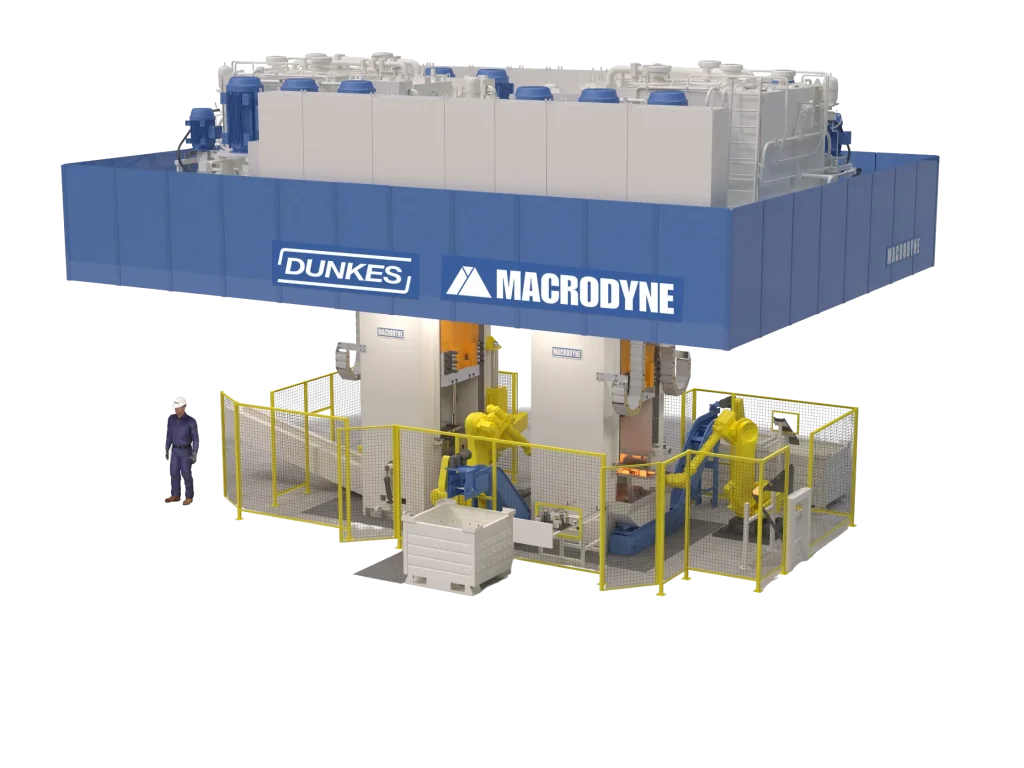
consume energy under real production loads.
Handling Unspecified Dimensions and Custom Requirements
Not every forging project fits cleanly into a specification table. And the more complex the part, the less useful rigid assumptions become.
Custom geometries, unconventional materials, and advanced die design requirements often introduce variables that are difficult to fully define upfront. This is especially true when forming windows are narrow, material behavior changes with temperature, or downstream handling influences how the part must exit the press.
In these situations, press specification becomes less about selecting a machine and more about engineering a system. Press behavior, tooling, material transfer, and part orientation are often interdependent. Treating them as separate decisions increases the risk of misalignment that only becomes visible during commissioning.
Documenting both explicit requirements and operational assumptions helps reduce those surprises. Many forging press issues don’t stem from bad equipment. They stem from gaps between how the process was imagined and how it actually runs.
Early technical dialogue matters here. Working with a supplier capable of addressing custom press behavior alongside automation, handling, and integration considerations allows those gaps to surface sooner, when changes are still inexpensive. It’s far more efficient than discovering constraints after steel is already moving and workarounds become permanent.
Common Mistakes to Avoid
Even experienced teams repeat the same mistakes when specifying a forging press.
Underestimating force requirements is common, particularly when transitioning from hot forging to cold forging processes.
Ignoring auxiliary systems, such as material handling, die change, and guarding, creates integration headaches later.
Assuming all presses behave the same at rated tonnage leads to disappointment. Force delivery profile matters as much as peak load.
And finally, overlooking maintenance access turns routine service into a shutdown event.
Limitations and Considerations
Every forging press has constraints.
Material size, tooling complexity, floor space, and infrastructure all influence what’s practical. Economic factors extend beyond purchase price to include energy use, tooling costs, and downtime risk.
Presses optimized for one part family may struggle with frequent product changes. Flexibility often trades against specialization.
Understanding these tradeoffs upfront allows engineers to specify equipment that supports real production, not just theoretical capacity.
Forging Press Problems Are Usually Self-Inflicted
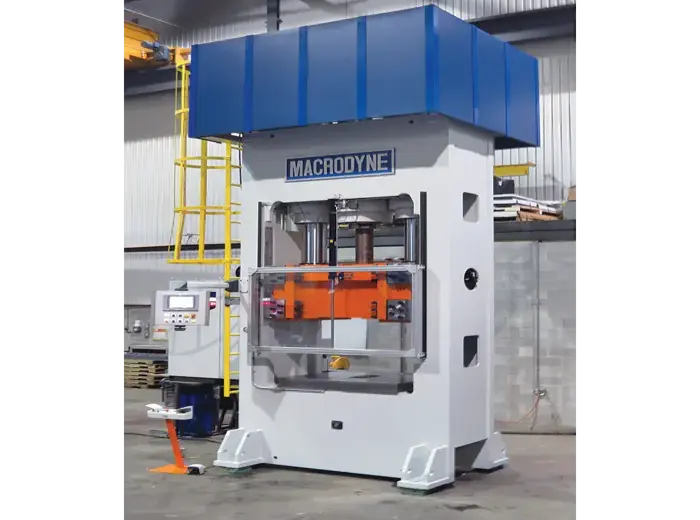
Specifying a forging press isn’t about checking boxes or chasing peak numbers. It’s about understanding how the press will behave when theory meets production.
- Tonnage capacity is a starting point, not a solution. Real success depends on how force is delivered throughout the stroke, how material flows in the die, and how consistently the press repeats that behavior over time.
- Process drives the press, not the other way around. Forming method, material behavior, and die design should dictate press architecture, motion, and control strategy, not habit or legacy equipment.
- Flexibility has value, but only when it’s intentional. Overbuilt presses hide problems. Under-specified presses expose them. The right balance supports today’s parts without limiting tomorrow’s.
- Integration matters more than most specs admit. A forging press doesn’t operate in isolation. Material handling, automation, inspection, and maintenance access all shape real-world performance.
- Most long-term problems are decided early. By the time a press is installed, the biggest constraints are already locked in. This happens often quietly and often permanently.
The Bottom Line
“The presses that perform best long-term are almost always the ones where the hardest questions were asked first,” explains Jeffrey Walsh, Director of Business Development at Macodyne Technologies. “Those questions are often skipped because they slow things down, until the press makes the oversight impossible to ignore.”
A forging press will always do what it’s told. The challenge is that specifications often say less than we think they do.
The most effective press selections come from slowing down early. It’s about questioning assumptions, validating process behavior, and treating the press as part of a system rather than a standalone machine. That approach doesn’t just reduce risk. It produces equipment that behaves predictably, supports quality goals, and stays useful long after the first part ships.
If the press performs exactly as specified, and production still struggles, the lesson is usually simple: the machine listened. The specification didn’t.