Large Custom Servo and Hydraulic Presses Explained
When manufacturers evaluate servo press vs hydraulic press, the conversation usually starts with tonnage and ends with cost. That’s understandable. It’s also how a lot of expensive mistakes get made.
At the scale where presses are custom-engineered, the real differentiators don’t live on the nameplate. They show up in how force is applied, controlled and sustained throughout the stroke, especially when the material doesn’t behave exactly the way the spreadsheet said it would.
The servo press vs hydraulic press decision isn’t about which technology is “better.” It’s about whether motion control or force stability matters more when the tooling is loaded, the material starts to flow, and the process drifts just enough to expose weak assumptions.
Servo presses rely on electrically driven motion systems. Hydraulic presses use fluid pressure to generate force. Both approaches are proven. Both scale well. Neither is forgiving when mismatched to the process.
Presses don’t fail because they lack features. They fail because they were asked to do the wrong job in the first place.
How Press Technologies Actually Differ
From an engineering standpoint, the hydraulic press vs mechanical press comparison is often misunderstood. Mechanical presses deliver peak force near bottom dead center, while hydraulic systems can deliver full tonnage anywhere in the stroke. Servo presses, depending on configuration, can mimic aspects of both while adding programmable motion.
A mechanical press diagram makes this limitation clear. Force is tied to crank position. Hydraulic presses decouple force from position entirely, which is why they dominate in deep draw, forming, and straightening applications.
This is where servo press vs hydraulic press comparisons need to move past generalizations and focus on how the force curve interacts with the material and tooling.
Force, Speed and Control
Servo presses excel where motion needs to be shaped. With a servo motor for precision, ram speed can slow, dwell, reverse, or accelerate at any point in the stroke. That’s valuable in forming processes where material flow must be carefully managed.
Hydraulic systems trade that motion flexibility for consistency. One of the acknowledged hydraulic press disadvantages is slower cycle speed, but that tradeoff comes with stable force delivery even when material thickness or resistance changes mid-stroke.
Understanding these tradeoffs is one of the most overlooked factors when buying press equipment.
Sizing the Press Correctly
Oversizing a press is one of the most expensive mistakes a buyer can make. Hydraulic press size requirements should be driven by real forming loads, not theoretical maximums. A press running at 40% capacity wastes energy, floor space and capital.
A properly sized hydraulic press machine operating within its optimal range will outperform a larger press that never reaches working tonnage. The same logic applies to servo systems, where motor and drive sizing must align with real load profiles.
Cost and Operational Reality
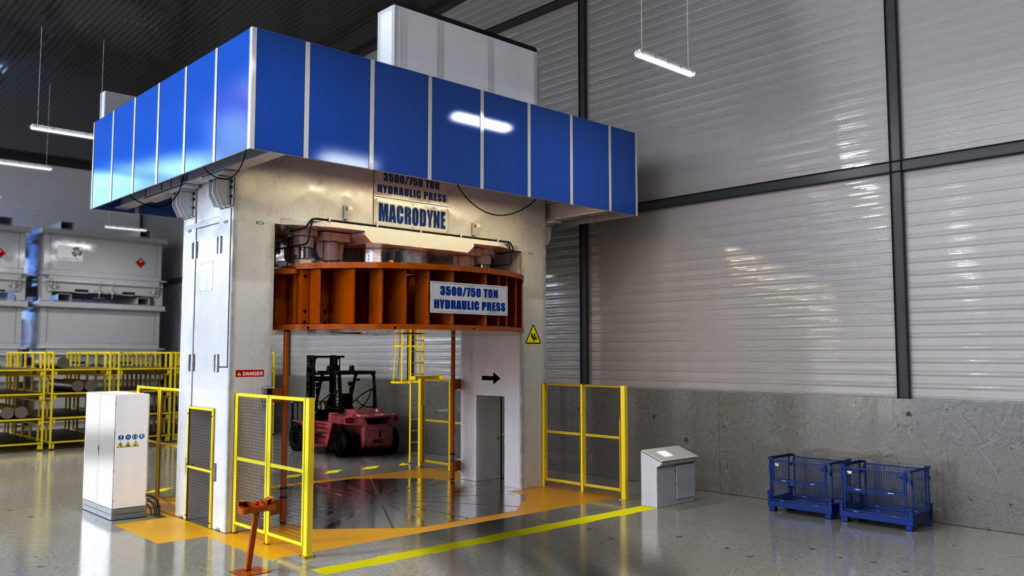
From a total cost perspective, energy and maintenance dominate long-term ownership. A large hydraulic press machine will typically consume more power during idle periods, while servo systems draw power primarily during motion.
That said, servo technology is not maintenance-free. Evaluating servo motor pros and cons means accounting for electrical infrastructure, drive systems, and technician skill requirements. Likewise, hydraulic systems demand disciplined fluid management and seal maintenance, but those tasks are familiar to most industrial plants.
Automation and Integration
Modern press lines live inside automated cells. When reviewing hydraulic press technical features, connectivity, sensor feedback, and integration with PLCs and safety systems matter as much as tonnage.
Servo presses tend to lead in data density and motion control. Their servo press technical features make it easier to capture force curves, synchronize auxiliary axes, and adjust recipes without mechanical changes.
From an automation standpoint, integration issues tend to surface where responsibilities blur.
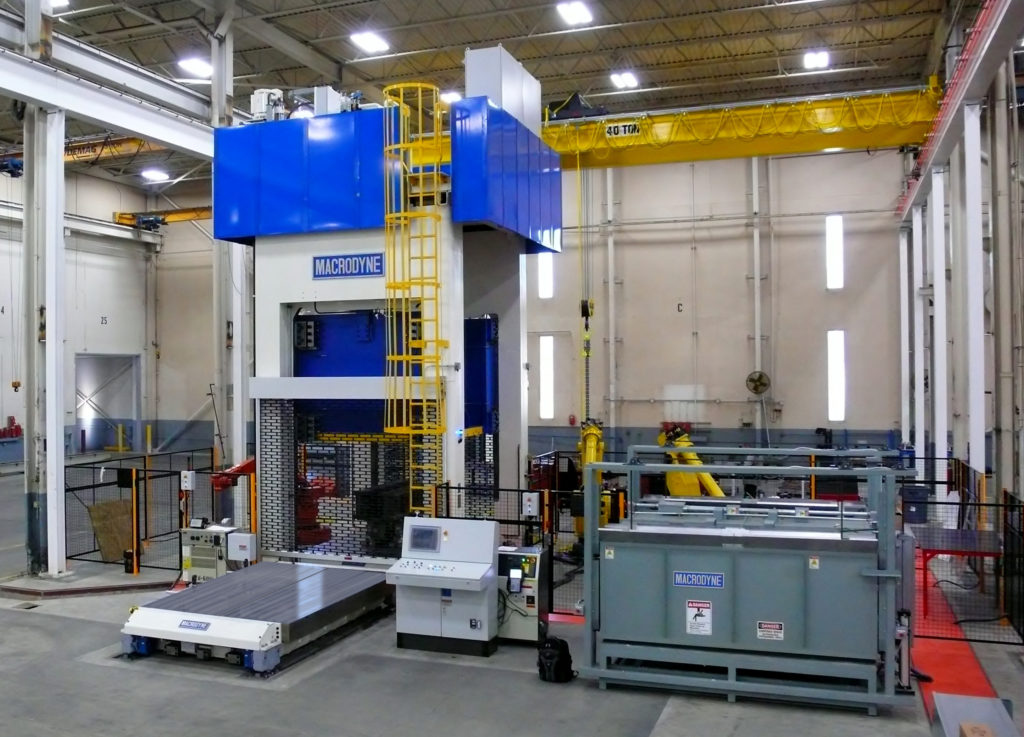
“When the press and automation are engineered separately, you end up tuning around problems instead of eliminating them,” says Kevin Fernandes, President of Macrodyne Technologies. “When they’re designed together, the system behaves the way you expect it to.”
Structure, Frame and Longevity
Regardless of drive technology, the press frame does the real work. Poor hydraulic press construction shows up as deflection, inconsistent forming, and shortened tool life. A stiff frame, properly guided slide, and well-engineered load paths matter more than the drive type itself.
Servo presses, in particular, demand robust frames to handle high-speed directional changes without vibration or backlash.
Avoiding Costly Selection Mistakes
Press buyers often focus on headline specs while overlooking how the machine will actually be used. Clear servo press selection criteria should include forming method, duty cycle, tooling weight, automation interfaces, and maintenance capability, not just force and stroke.
This is where experience matters. The press is rarely the problem. Mismatched expectations usually are.
“Most problems don’t show up in the quote review. They show up six months after install. By then, everyone agrees the press works. It’s the assumptions around it that didn’t,” says Jeffrey Walsh, Director of Business Development with Macrodyne Technologies.
And in most cases, those mismatches don’t come from the equipment itself. They come from how the system was specified, engineered, and integrated. That’s why the choice of supplier matters just as much as the choice of press technology.
Choosing the Right Press and Automation Supplier
Selecting the right press technology is only part of the equation. The bigger, and often riskier, decision is choosing the supplier responsible for engineering, integration, and long-term support. At large tonnages and high levels of automation, execution matters more than specs.
Here are a few principles to guide the decision.
Start With Process Understanding, Not a Catalog
A capable supplier should ask detailed questions about the forming process before recommending a solution. That includes material behavior, force distribution through the stroke, tooling constraints, cycle time targets, and downstream automation. If the conversation jumps straight to tonnage and footprint, that’s a red flag.
Good press builders design around the process. Great ones design around what happens before and after the press.
Evaluate Automation Experience at Scale
Automation adds efficiency, but it also adds complexity. Look for suppliers who design presses and automation as a single system, not separate components stitched together later. Integrated responsibility reduces finger-pointing during commissioning and simplifies troubleshooting once the line is running.
Ask direct questions:
- Who owns the controls architecture?
- Who debugs the line when transfer, tooling, and press motion interact?
- Who supports the system five years from now?
Engineering Depth Over Marketing Claims
Presses that run reliably for decades are built on conservative engineering, not optimistic assumptions. Review frame design, guidance systems, hydraulic or servo architecture, and safety margins. A supplier should be willing and able to walk through these decisions with real engineering rationale, not just brochures.
If detailed drawings and load-path explanations aren’t part of the discussion, that’s another warning sign.
Single-Source Accountability Reduces Risk
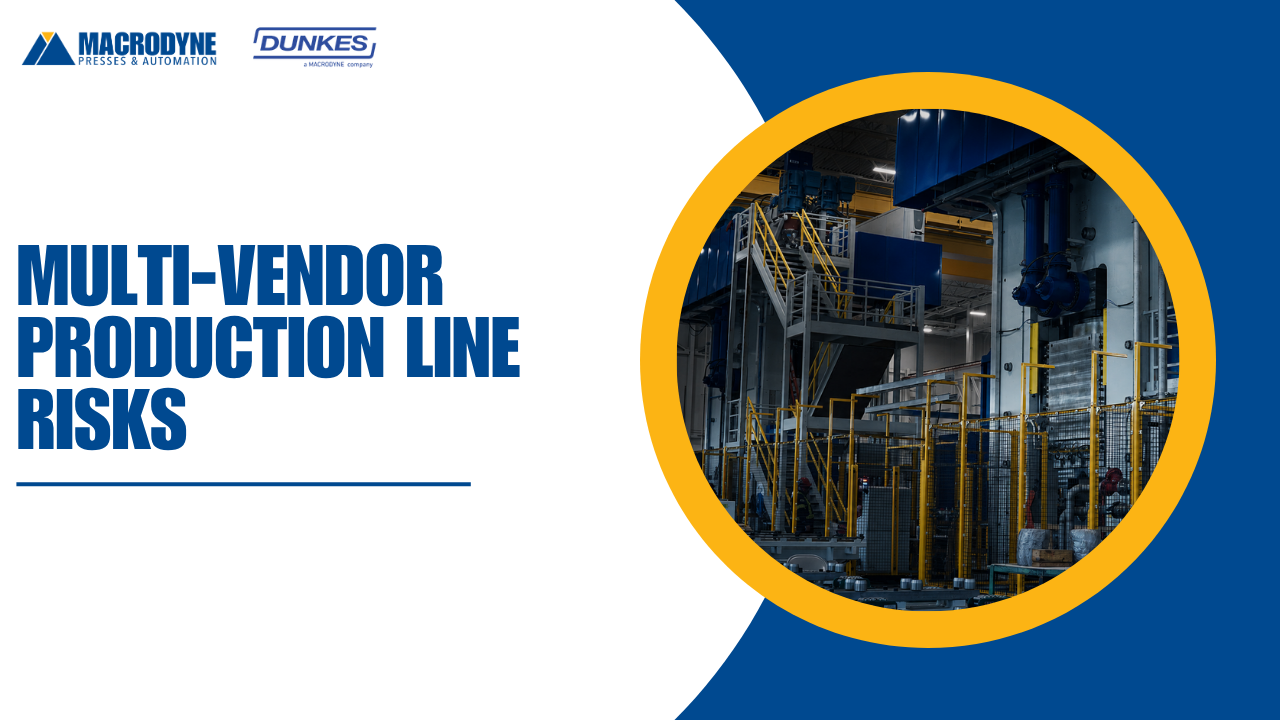
Multi-vendor press lines often look attractive on paper but become difficult to manage in reality. When problems arise, responsibility gets diluted. A single supplier accountable for press, automation, controls, and integration reduces startup risk and simplifies long-term support.
This approach typically leads to faster commissioning, clearer documentation, and fewer surprises during production ramp-up.
Long-Term Support Is Part of the Purchase
Large presses aren’t disposable assets. Evaluate spare parts strategy, service response times, software support, and retrofit capability. A supplier who understands how presses age and how production requirements evolve adds value well beyond initial installation.
Press and Automation Evaluation Checklist
Before finalizing a press purchase, pressure-test the decision with a checklist like this. It helps expose gaps early, before they turn into delays, change orders, or performance compromises.
Process and Part Requirements
- Forming method and material behavior clearly defined
- Required force profile through the stroke (not just peak tonnage)
- Stroke length, daylight, and tooling weight confirmed
- Part variability and future part families considered
Performance and Duty Cycle
- Target strokes per minute or cycle time validated
- Dwell requirements identified and tested
- Expected duty cycle aligned with press design
- Energy consumption modeled for real production conditions
Automation and Integration
- Material handling method defined (transfer, robot, manual, hybrid)
- Controls architecture ownership clearly assigned
- Press motion and automation timing engineered as one system
- Safety systems integrated, not added as an afterthought
Structural and Installation Constraints
- Floor loading and foundation requirements verified
- Press envelope, maintenance access, and service clearances confirmed
- Tool change strategy aligned with press and automation layout
Support and Lifecycle Considerations
- Spare parts strategy and lead times understood
- Service support model defined post-installation
- Controls and software upgrade path considered
- In-house maintenance and operator skill levels accounted for
A checklist like this doesn’t replace engineering expertise, but it does surface the right questions early. And the quality of the answers depends heavily on the supplier behind the system.
Additional Considerations for Aerospace and Defense Applications

Press and automation decisions in aerospace and defense manufacturing carry a different level of consequence. Qualification requirements are stricter, tolerances are tighter, and downtime is rarely acceptable. In these environments, press selection is as much about risk management as it is about performance.
Process Stability and Repeatability
Aerospace and defense programs demand repeatable results over long production runs, often spanning decades. Presses must deliver consistent force and motion, not just today, but after millions of cycles. This places added importance on frame stiffness, guidance systems, and closed-loop control strategies that maintain accuracy over time.
Processes involving deep drawing, forming of high-strength alloys, or long dwell cycles benefit from press designs that prioritize force stability and thermal control.
Qualification, Traceability, and Data Capture
Modern defense and aerospace programs increasingly require part-level traceability and process documentation. Presses and automation systems should be capable of recording force curves, stroke profiles, dwell times, and alarm events for every cycle.
This data isn’t just for troubleshooting. It supports qualification, audit readiness, and long-term program compliance.
Automation With Accountability
In defense manufacturing especially, automation is often introduced to reduce labor risk and improve consistency, but only when it’s engineered conservatively. Transfer systems, manipulators, and tooling interfaces must be robust, serviceable, and tolerant of variation.
Single-source responsibility becomes critical here. When presses and automation are engineered together, system behavior is predictable. When they’re sourced separately, integration risk increases dramatically.
Long Program Lifecycles
Unlike commercial programs that may turn over every few years, aerospace and defense equipment is expected to remain viable for decades. That means evaluating:
- Controls platforms with long-term support availability
- Retrofit paths for future automation or process changes
- Spare parts strategies that won’t disappear mid-program
A press that cannot evolve becomes a liability, no matter how well it performs on day one.
Facility and Security Constraints
Defense manufacturing often brings additional constraints, including restricted layouts, controlled access zones, and unique safety or compliance requirements. Press and automation systems must be designed to fit within these realities without compromising maintainability or operator safety.
Early coordination between press builder, automation team, and facility engineering avoids costly redesigns later.
Final Takeaway
There is no universally “better” option; only better alignment. The smartest servo press vs hydraulic press decisions start with the process and end with the technology, not the other way around.
“A press doesn’t just make parts,” explains Kevin Fernandes, President of Macrodyne Technologies. “It sets the boundaries for how a process can behave. That’s a decision you live with for a long time.”
When manufacturers do the work upfront (understanding force behavior, motion demands, space constraints, and lifecycle costs), they don’t end up with a press that looks good on paper. They end up with one that still runs exactly the way it should 20 years later.