Introduction to Hydraulic Presses and Automation in Artillery Shell Production
The global demand for 155mm artillery shells has reached unprecedented levels, with the U.S. Army alone planning to produce over one million shells annually by next year.
This surge in demand has placed immense pressure on manufacturers to revolutionize their production capabilities while maintaining the exacting quality standards required for military ordnance.
At the heart of modern artillery shell manufacturing lies a sophisticated combination of hydraulic press technology and advanced automation systems.
These manufacturing powerhouses enable the precise press extrusion processes essential for creating the complex geometries and metallurgical properties that 155mm shells demand.
The integration of hydraulic presses with automated systems has transformed what was once a labor-intensive, time-consuming process into a streamlined operation capable of meeting today’s production quotas.
However, scaling production isn’t simply about running machines faster.
The artillery ammunition market faces significant manufacturing challenges, from material sourcing constraints to the need for specialized equipment capable of handling the extreme forces required in shell formation. Success requires understanding how hydraulic press systems work within the broader manufacturing ecosystem.
To navigate this complex landscape effectively, manufacturers need a comprehensive framework for understanding how these technologies integrate and optimize production workflows.
Framework for Understanding Hydraulic Presses in Manufacturing
Hydraulic presses represent one of the most fundamental manufacturing technologies in modern industrial production, utilizing Pascal’s principle to generate immense force through pressurized fluid systems. These machines excel at shaping, forming and compressing materials with precision and consistency that manual processes simply cannot achieve.
Understanding how are 155mm artillery shells made requires grasping the critical role hydraulic presses play in multiple manufacturing stages. From initial metal forming operations to final assembly processes, these powerful machines enable manufacturers to work with the high-strength steel alloys and precise tolerances that artillery shells demand.
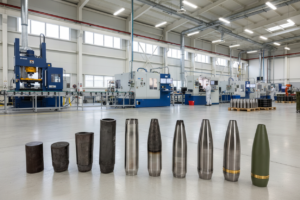
The beauty of hydraulic press technology lies in its scalability and control. Unlike mechanical presses that rely on fixed stroke patterns, hydraulic systems offer variable force application throughout the entire stroke cycle. This characteristic proves invaluable when working with thick-walled steel components that require gradual, controlled deformation to prevent cracking or material failure.
In artillery shell production specifically, hydraulic presses handle everything from deep-drawing operations that create shell casings to precision forming of driving bands and nose cone components. The consistent pressure application ensures uniform wall thickness and proper metallurgical properties. These are critical factors that directly impact shell performance and safety during firing operations.
This technological foundation sets the stage for understanding why automation becomes essential in scaling these precise manufacturing processes.
Why Automation is Essential in Artillery Shell Production
The modern defense manufacturing landscape demands unprecedented precision and scale that manual processes simply cannot deliver. In artillery shell production, automation has evolved from a competitive advantage to an absolute necessity, driven by escalating global demand and increasingly stringent quality requirements.
Production volume pressures represent the most compelling argument for automation. The U.S. Army’s ambitious goal to produce over one million artillery shells annually illustrates the scale challenge facing manufacturers. Traditional manufacturing methods lack the throughput capacity to meet such demands while maintaining the consistency required for military-grade ordnance.
The role of hydraulic presses in shell production becomes particularly critical when considering quality control requirements.
Artillery shells must meet exacting specifications—dimensional tolerances measured in thousandths of an inch, material consistency that affects ballistic performance, and structural integrity that ensures reliable function under extreme conditions. Automated hydraulic systems deliver the repeatable precision necessary to maintain these standards across massive production runs.
“Consistency is what ultimately defines performance in artillery manufacturing,” says Jeff Walsh, Macrodyne’s Director of Business Development. “It’s not enough to hit the spec once. You need to hit it the same way, every cycle, across thousands of parts. That’s where fully automated hydraulic systems make the difference. They bring control and repeatability into a process where even small variations can have real consequences.”
Cost efficiency further reinforces automation’s importance. Defense manufacturers recognize that automated systems reduce per-unit costs while eliminating human error variables that could result in costly rework or, worse, field failures that compromise mission effectiveness.
Technical Deep Dive: Hydraulic Presses in Artillery Shell Production
The shell manufacturing process for 155mm artillery rounds relies heavily on hydraulic press technology to achieve the precise dimensional tolerances and structural integrity required for battlefield effectiveness.
Modern hydraulic presses in artillery production typically operate at pressures ranging from 1,000 to 4,000 tons, enabling the controlled deformation of steel blanks into complex shell geometries.
During the initial forming stage, hydraulic presses shape raw steel billets through progressive drawing operations. The press applies uniform pressure across the workpiece, creating consistent wall thickness while maintaining the critical internal dimensions that ensure proper ballistic performance. This process requires extreme precision. Dimensional variations of just 0.001 inches can affect trajectory accuracy.
The heat treatment integration represents another crucial application where hydraulic presses excel. After initial forming, shells undergo controlled heating and cooling cycles while under hydraulic pressure, ensuring optimal grain structure and eliminating internal stresses that could lead to catastrophic failure during firing.
Automation in artillery shell factories has revolutionized how these hydraulic operations integrate with downstream processes. Modern facilities utilize programmable logic controllers that coordinate press operations with material handling systems, quality inspection stations, and inventory management—creating seamless production flows that minimize human intervention while maximizing output consistency.
This technical foundation sets the stage for understanding how complete automation systems can transform these individual hydraulic operations into fully integrated production lines.
Integrating Automation with Hydraulic Presses
Modern shell forging operations require seamless integration between automated control systems and hydraulic press machinery to achieve the precision demanded by military specifications. This integration transforms traditional manufacturing processes into sophisticated production lines capable of meeting the Army’s ambitious goal of producing over one million artillery shells annually.
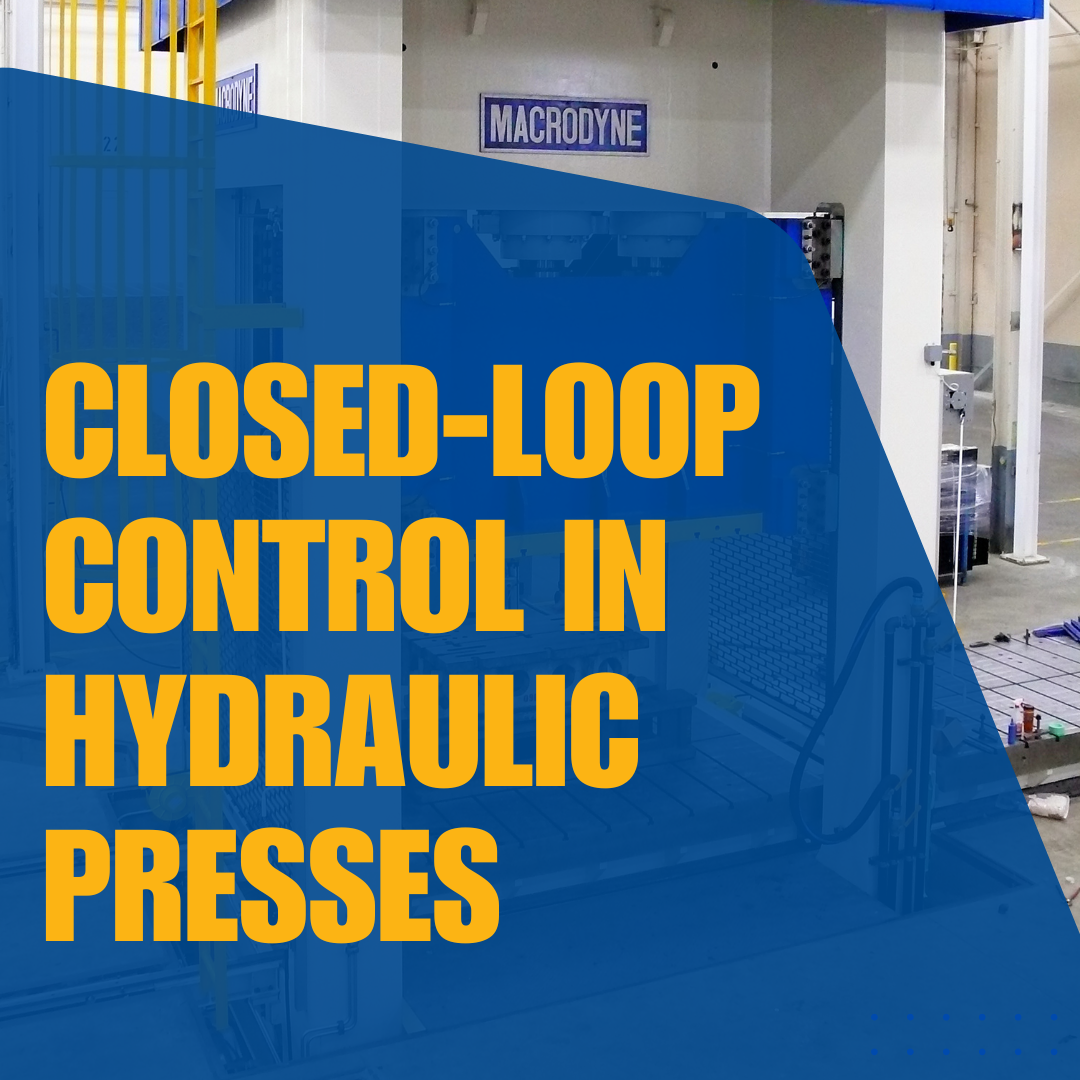
The integration process centers on real-time feedback systems that monitor every aspect of the forging operation. Sensors continuously track hydraulic pressure, temperature, and material flow throughout the press cycle, automatically adjusting parameters to maintain optimal conditions. This closed-loop control ensures consistent shell geometry and metallurgical properties while reducing operator intervention.
Hydraulic presses in 155mm shell production benefit from programmable logic controllers (PLCs) that coordinate multiple press stations simultaneously. These systems manage complex sequencing operations, from initial billet heating to final dimensional inspection. Advanced automation protocols can detect anomalies within milliseconds, triggering immediate corrections or stopping production to prevent defective rounds.
Integration also enables predictive maintenance capabilities that monitor hydraulic system health in real-time. By analyzing pressure variations, temperature fluctuations, and cycle timing, automated systems can predict component failures before they occur, minimizing costly downtime. This proactive approach becomes increasingly critical as manufacturers scale operations to meet growing ammunition demands across multiple production scenarios.
Example Scenario: Real-World Application
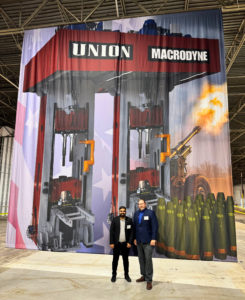
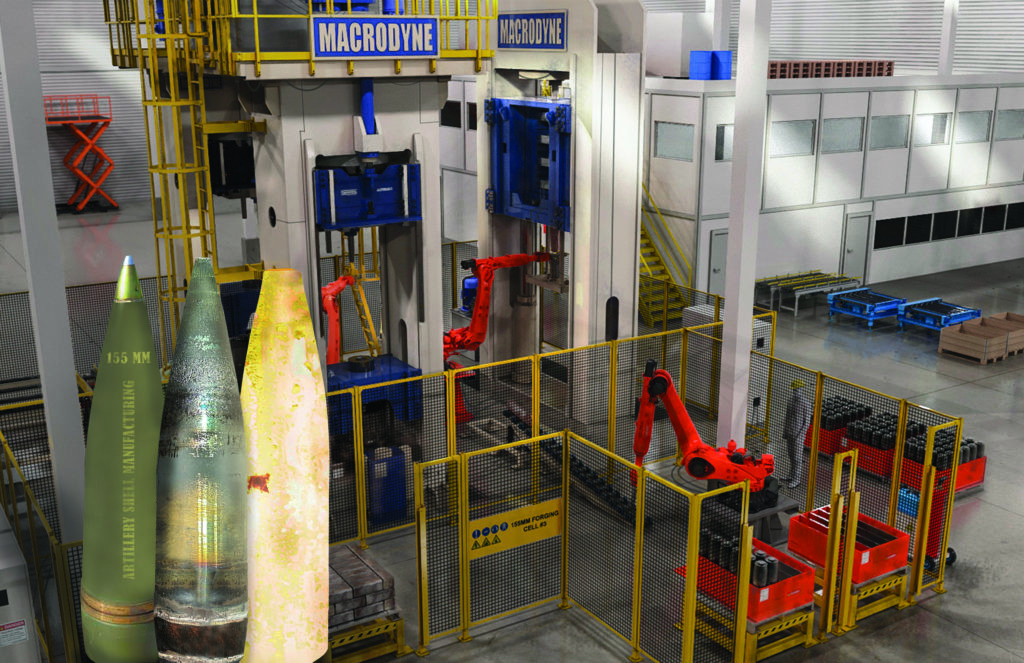
A clear real-world example of what automation can look like in 155 mm shell manufacturing is the fully integrated press system developed by Macrodyne Technologies for UNION Technologies. At UNION’s “Factory of the Future” in Texas, the focus wasn’t on installing a single high-capacity press. It was on engineering an entire production line as one coordinated system.
From billet preparation and heating through forming, machining, heat treatment, inspection, and final finishing, every stage is linked through a unified controls architecture. The result is a continuous, synchronized flow where parts move through the line with minimal manual intervention and full digital traceability.
“Most challenges in ammunition production don’t come from the press itself,” says Kevin Fernandes, President of Macrodyne. “They come from how the system is put together. When you engineer the press, automation, and controls as one, you remove the gaps where inconsistency starts.”
What makes this approach notable is how it addresses the typical weak points in ammunition manufacturing. Instead of stitching together equipment from multiple vendors, the system is designed and delivered as a single, accountable solution, aligning press behavior, material flow, automation timing, and quality control from the outset.
This reduces ramp-up time, stabilizes production, and enables consistent output at scale.
In practical terms, it demonstrates how automation in 155 mm shell production is evolving from isolated upgrades to fully integrated manufacturing systems built for repeatability, visibility, and sustained high-volume output.
The 155mm ammunition market’s projected growth to $4.2 billion by 2032 reflects the scalability of these automated systems. Modern facilities can achieve production rates of 24,000 shells per month per line, with hydraulic presses operating at 85% efficiency during peak production cycles.
However, achieving these performance levels requires careful consideration of system limitations and operational challenges that can significantly impact production outcomes.
Key Takeaways
The integration of hydraulic presses and automation represents a transformative approach to 155mm artillery shell production, addressing critical capacity shortfalls while maintaining the precision required for modern defense applications.
Manufacturing efficiency emerges as the primary benefit, with automated hydraulic systems reducing cycle times by up to 40% compared to traditional methods. However, the substantial capital investment requires careful financial planning and long-term commitment from defense contractors.
Quality consistency remains paramount, as these systems eliminate human variability in critical forming operations while maintaining the dimensional tolerances essential for artillery effectiveness. The technology proves particularly valuable for high-volume contracts where consistent output directly impacts military readiness.
The next phase of 155 mm production won’t be defined by capacity alone. It will be defined by control, integration, and consistency at scale.
Those who invest in fully engineered systems today won’t be scrambling to catch up tomorrow.
They’ll already be producing.