How Hydraulic Presses Work
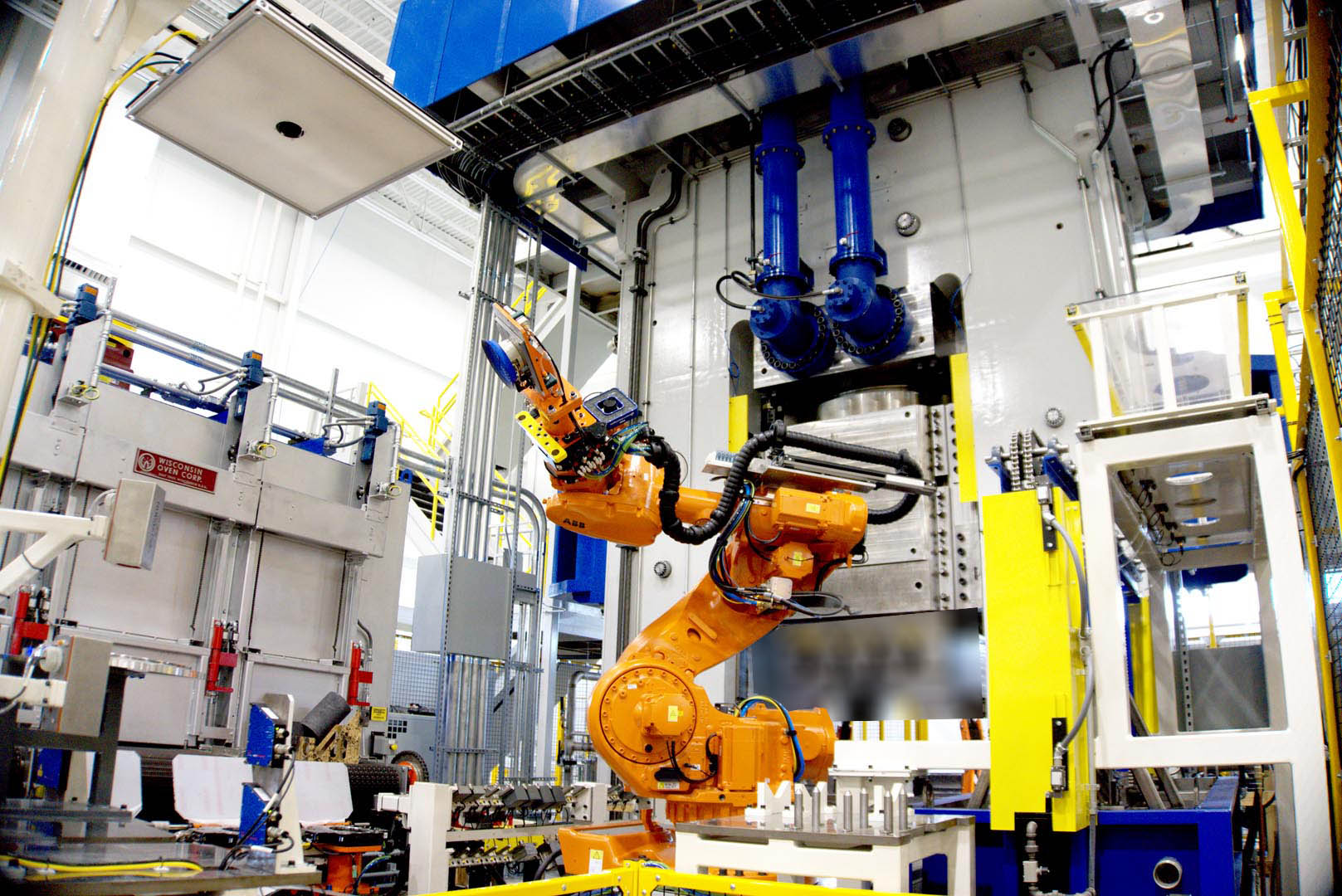
At their core, hydraulic presses operate on Pascal’s principle: pressure applied to an incompressible fluid is transmitted uniformly. A pump pressurizes hydraulic oil, valves regulate flow and pressure, and that pressure drives a piston connected to the ram and tooling.
The elegance is in the simplicity. Few moving parts. High force density. Straightforward scaling — from modest tonnage to presses delivering tens of thousands of tons.
Servo Presses Offer Control, Not Just Power
Servo presses approach forming from the opposite direction. Instead of prioritizing raw tonnage, they prioritize control.
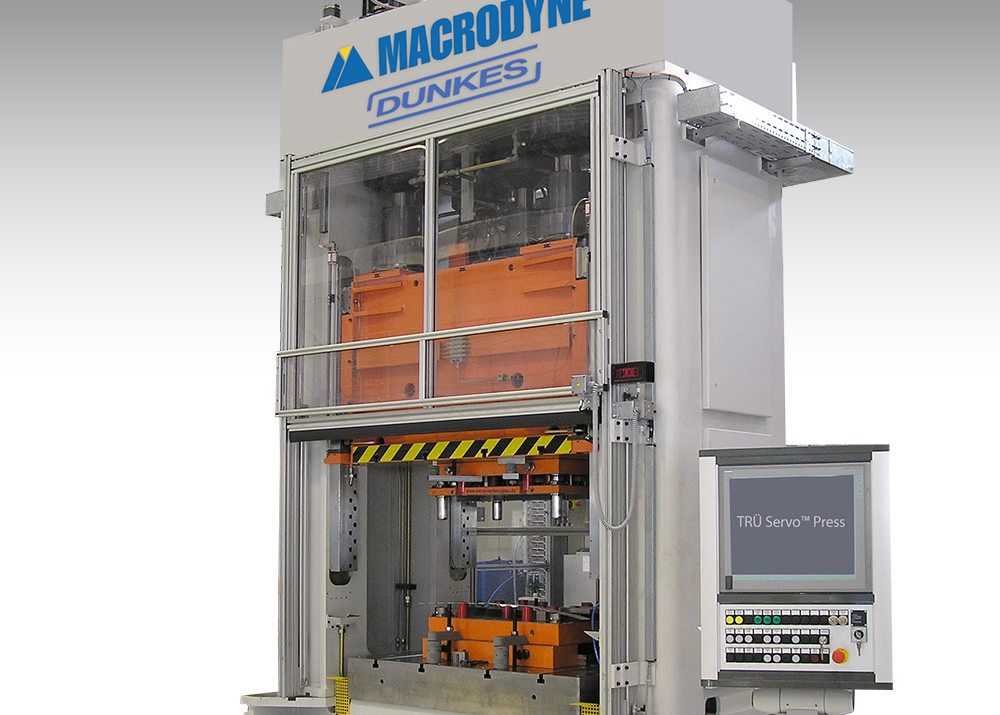
Electric servo motors drive ball screws or direct-drive systems, allowing engineers to define exactly how the ram moves throughout the stroke. Fast approach. Controlled forming. Precise dwell. Immediate retraction. Motion becomes a software parameter rather than a mechanical constraint.
Position feedback is continuous, not inferred. Force is applied where it matters, not just where the stroke happens to end. For applications that depend on precision pressing, this level of control can be the difference between managing variation and chasing it.
Every stroke generates data — force curves, position accuracy, cycle timing — supporting quality control, traceability, and predictive maintenance. This is where servo technology earns its keep.
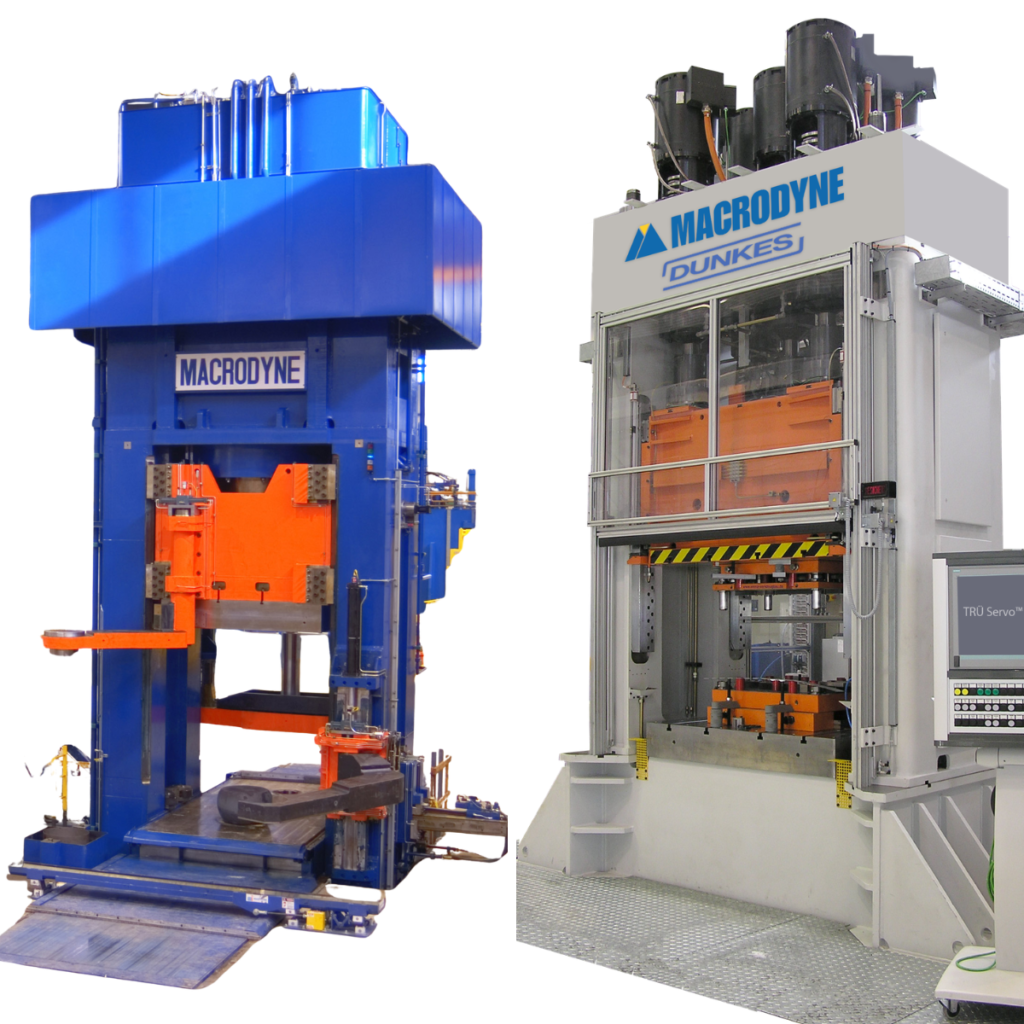
Servo-hydraulic presses sit between the two worlds, using servo-controlled pumps to modulate hydraulic pressure and flow. They retain much of the programmability of servo systems while extending practical force limits, particularly where fully electric solutions become cost-prohibitive.
The tradeoff is complexity. Servo systems reward preparation and skilled integration. They are less forgiving of shortcuts.
Limitations and Tradeoffs, Because There is No Free Lunch
Servo presses, while increasingly powerful, still do not compete with the largest hydraulic forging presses operating in the 10,000–80,000-ton range. Even though servo-mechanical presses now reach into the low thousands of tons, ultra-high-force work remains firmly hydraulic territory.
Hydraulic presses, on the other hand, struggle to match servo systems in speed control, motion flexibility, and energy efficiency. They do one thing exceptionally well — apply force — and everything else is a compromise.
Maintenance requirements also differ. Servo presses demand electrical and controls expertise. Hydraulic presses require disciplined fluid management. Neither is simpler; they’re just complicated in different ways.
Servo presses trade simplicity for sophistication. Hydraulic presses trade flexibility for certainty. Neither choice is wrong, right up until the process reminds you otherwise.
Common Mistakes to Avoid
The most common error is choosing based on purchase price alone. Over a 10 to 15 year lifecycle, energy use, downtime, and maintenance often matter more than the initial quote.
“Upfront cost gets a lot of attention, but presses live on the floor for decades,” says Jeffrey Walsh, Macrodyne Director of Business Development. “Energy use, uptime and flexibility usually matter more than the purchase price once production starts.”
Another frequent misstep is underestimating the learning curve of servo technology. Without the right expertise, a servo press becomes an expensive hydraulic press with better marketing.
Oversizing servo presses for constant high-force work is also a common mistake. Servo technology excels at variable force. Asking it to behave like a forging hammer is a fast way to shorten its life.
Finally, infrastructure matters. Servo presses require clean power, stable environments, and thoughtful integration. Ignoring that reality has derailed more than a few otherwise sound projects.
Servo Presses and Hydraulic Presses Solve Different Problems
Servo technology excels where motion control, flexibility, and repeatability matter, and is often favored as one of the more energy-efficient presses when variable motion offsets higher upfront cost. Hydraulic presses remain the proven solution for heavy-duty work where sustained force, dwell, and scale outweigh the need for fine motion control.
The most effective press strategies focus on total cost of ownership, process behavior, and long-term production needs — not trends. Many facilities ultimately land on a hybrid approach, using servo technology for precision work and hydraulic systems for heavy forming operations.
The best press decisions don’t come from chasing the latest technology. They come from watching parts run, listening to operators, and being honest about what the process actually needs. Do that, and the press choice stops feeling complicated. It just feels right.