

Drone manufacturing is at a crossroads. The era of handcrafted, boutique aerospace production — where a single airframe might spend weeks in an autoclave — is colliding head-on with a new strategic reality: modern warfare demands drones by the thousands, not the dozen.
The U.S. Department of Defense’s drone dominance initiatives are explicitly designed to shift procurement away from low-volume, high-cost platforms toward attritable unmanned systems — assets that are affordable enough to deploy at scale and accept as battlefield losses. This is a fundamental manufacturing philosophy shift, not just a procurement preference.
The Production Inflection Point is the moment a program moves from orders of dozens to contracts demanding thousands of units annually. At that threshold, every inefficiency in your production process compounds. What felt like flexibility becomes friction. What was acceptable lead time becomes a program-killing bottleneck.
The conflict in Ukraine made this painfully clear.
Both the U.S. and Europe face acute drone procurement crises because their industrial base was never engineered for this velocity. Adversaries demonstrated that producing capable airframes rapidly and repeatedly is a decisive strategic advantage.
This is precisely why compression molding presses for drone manufacturing are moving from a niche consideration to a core production strategy.
The question isn’t whether autoclaves produce quality parts. They certainly do. The question is whether they can scale.
The answer leads directly to a hard comparison of throughput, cycle time and real-world production economics.
Autoclave vs. Compression Molding: The 10x Throughput Reality
Understanding why traditional aerospace manufacturing breaks down at scale starts with one piece of equipment: the autoclave. As the previous section established, handcrafted production simply can’t meet modern defense demand. The root cause is more specific than most people realize.
The ‘Monument’ Problem
Autoclaves are, in manufacturing terms, monuments — massive, fixed, capital-intensive pressure vessels that dominate factory floor space and dictate workflow around themselves.
A single large autoclave can occupy thousands of square feet, cost upward of $10 million to install, and require extensive utility infrastructure. More critically, everything flows to the autoclave on its schedule, not the other way around. You can’t run parallel production lines through a single pressure vessel. Throughput is structurally capped.
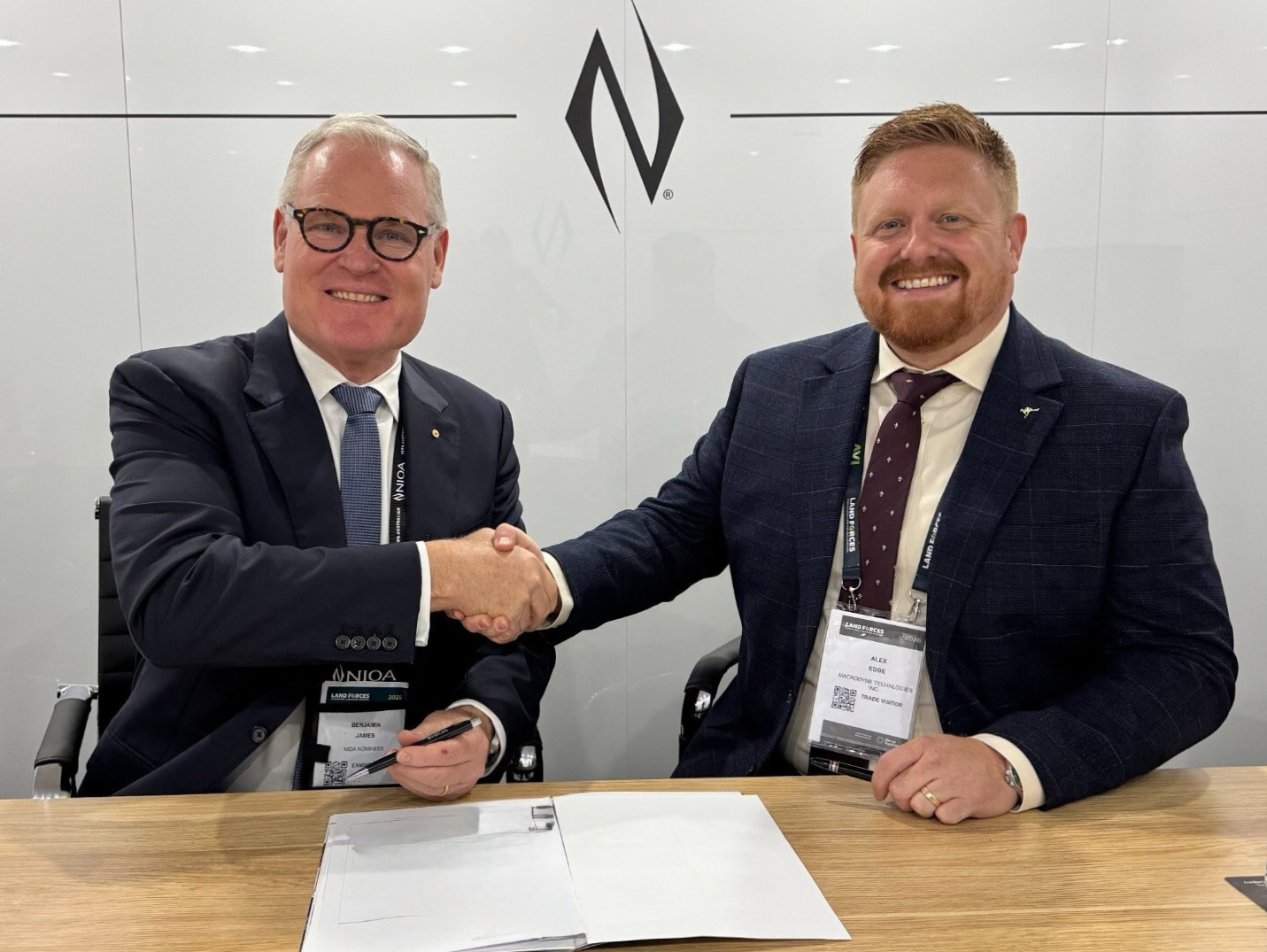
“At low volumes, autoclaves make sense,” says Alex Edge, Macrodyne’s Director of Business and Product Development in Europe. “At scale, they dictate everything, including cycle time, floor layout, even how many units you can deliver. That’s not a process you control. That’s a constraint you work around.”
Cycle Time: Where the Math Becomes Brutal
The numbers here are unambiguous.
A typical autoclave cure cycle runs 4 to 7 hours per part load, and that’s before accounting for layup, bagging, and post-cure inspection.
Compression molding on a hydraulic press, by contrast, delivers cure cycles of 10 to 30 minutes for comparable structural composite parts. That’s not an incremental improvement. That’s a fundamental shift in what’s physically possible per shift, per day, per facility.
Autoclaves also demand significant manual labor. Each part requires hand-layup, vacuum bagging, bleeder and breather materials, and careful debulking. These are all skilled, time-intensive steps that introduce variability and drive labor costs.
In a high-volume defense context, that variability compounds pretty quickly across thousands of units.
Repeatability at Scale
One of the most underappreciated advantages of matched-metal tooling in compression presses is dimensional consistency. Because both mold halves are rigid and machined to precise tolerances, every part comes out geometrically identical.
Autoclaves, relying on flexible vacuum bags and atmospheric pressure uniformity, introduce subtle but real variation. This is problematic when components must integrate across modular drone platforms at volume.
This is exactly why scaling defense manufacturing compression presses has shifted from a niche engineering conversation to a strategic procurement priority.
“The question for defense OEMs is no longer whether to transition,” says Edge. “It’s how fast they can get there. That urgency becomes even sharper when you examine what the DoD is actually demanding in terms of production volume.”
Meeting the ‘Drone Dominance’ Mandate: 30,000 Units Per Month
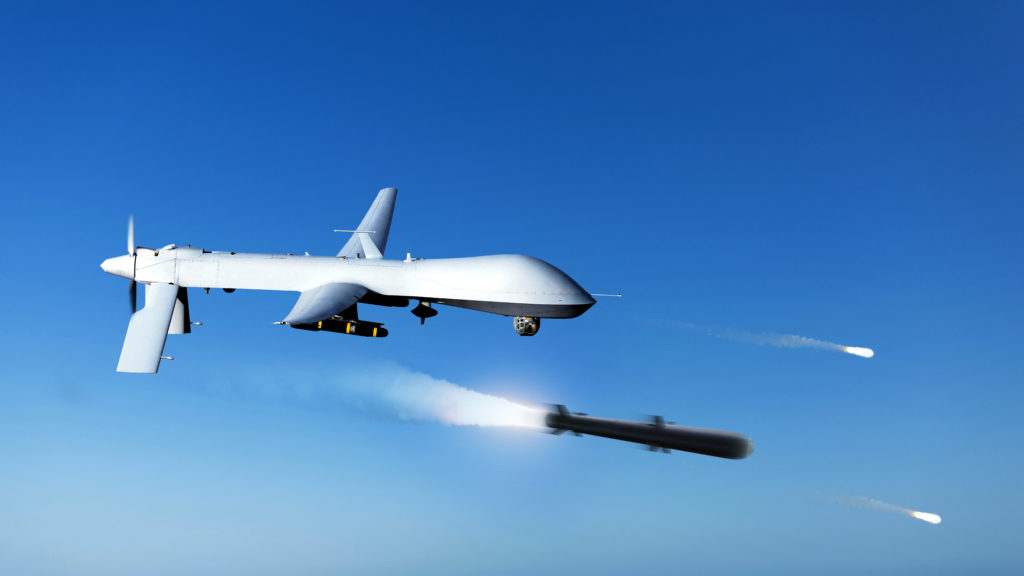
The numbers coming out of Washington aren’t aspirational. They’re operational requirements. The DoD’s Drone Dominance initiative has placed modular, attritable drone systems at the center of near-term defense strategy, with production targets that dwarf anything the traditional aerospace supply chain was designed to support.
The Infrastructure Gap Is Real
As covered in the previous sections, autoclaves simply can’t bridge this gap.
The math is unforgiving. A single large autoclave cycle runs 8–16 hours and processes a limited batch of parts. Scaling to 30,000 complete drone units per month — across propellers, fuselages, and structural panels — would require a staggering number of autoclave installations, each costing millions of dollars and consuming enormous facility footprint. It’s physically and economically impossible at that tempo using legacy methods.
The Defense Innovation Board has specifically flagged manufacturing scalability as a critical barrier to fielding attritable systems at the pace modern conflict demands.
Tactical Edge Manufacturing and Modularity
The emerging answer is Tactical Edge manufacturing. This is distributed, modular production designed for speed and adaptability. This model favors standardized drone kit architectures where interchangeable components can be produced in high volumes, then assembled rapidly in forward-deployed or regional facilities.
Cost-effective compression molding drone components fit this model perfectly. Press cycle times measured in minutes, not hours, means a single production line can realistically output thousands of propellers and fuselage shells per day. Components emerge near-net-shape, with consistent fiber orientation and minimal post-processing required. Sounds pretty good, right?
High-rate production isn’t just a throughput problem. It’s a systems design problem. The manufacturing process and the product architecture must evolve together.
That shift in thinking raises an equally important question: who controls the production assets, and what strategic advantages come with keeping that capability in-house?
The Strategic Case for In-House Press Production
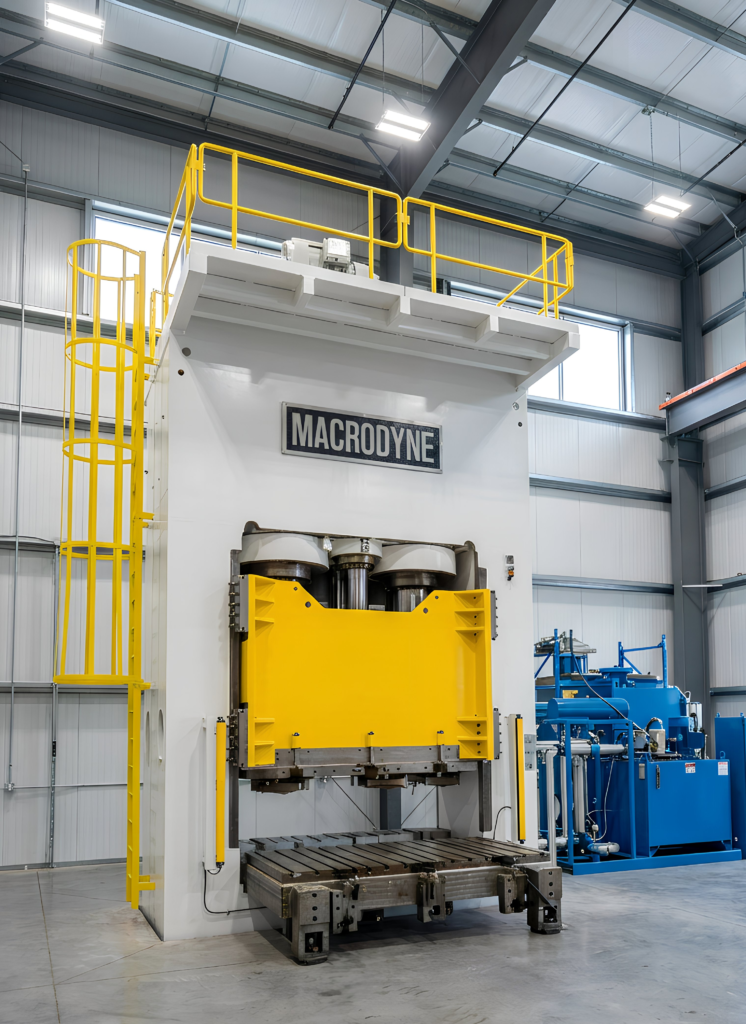
The autoclave-to-compression-molding transition isn’t purely a throughput decision.
For defense OEMs facing multi-year production contracts, it’s increasingly a strategic one, touching IP protection, cost predictability and supply chain resilience in ways that traditional outsourced composites manufacturing simply can’t match.
“At scale, this stops being a manufacturing decision and becomes a strategic one,” says Edge. “Bringing composite forming in-house with compression molding gives OEMs control over their IP, their timelines, and their cost structure. These are things that are hard to guarantee when you’re relying on external autoclave capacity.”
Locking Down Intellectual Property
When a prime contractor sends composite layups to a third-party supplier, proprietary geometry, material specifications, and structural data leave the building.
In-house compression molding eliminates that exposure entirely.
Controlling the press means controlling the IP. This is a non-trivial advantage when the airframe itself is the competitive differentiator in a defense program.
As DoD’s Manufacturing Innovation initiatives have long emphasized, keeping advanced manufacturing processes internal is central to maintaining a durable technology edge.
Eliminating ‘Monument’ Constraints in the Supply Chain
Outsourcing composite structures creates what defense planners call monument constraints. These are single-source dependencies that can stall entire programs when a supplier misses delivery.
Vertical integration through in-house pressing removes those chokepoints.
One practical approach is to build press capacity sized to peak program demand, then use that same capacity for prototyping during contract lulls.
Predictable Cost Modeling at Scale
Long-term defense programs demand financial predictability. Variable supplier pricing, raw material surcharges, and logistics costs make outsourced composites a budgeting liability. In-house press operations convert those variables into fixed overhead costs, making per-unit modeling far more reliable across a five- or ten-year production run.
The thermoplastic composites market is projected to grow substantially through 2032, and locking in internal capacity now hedges against rising external supplier costs.
In-house production fundamentally transforms composite manufacturing from a procurement problem into an engineering advantage. That design iteration speed becomes even more pronounced when you introduce additive manufacturing into the tooling workflow, which is exactly where the next evolution in press-based production is headed.
Hybrid Manufacturing: Integrating Additive Manufacturing with Compression Presses
The shift away from autoclaves doesn’t mean abandoning manufacturing innovation. It means stacking innovations together. One of the most practical developments accelerating defense composite production is the integration of additive manufacturing with compression molding workflows. The result is a faster, leaner tooling pipeline that directly addresses the cost and lead-time barriers that have historically slowed scale-up.
Rapid Tooling Through 3D Printing
Traditional metal mold fabrication is expensive and slow. CNC-machined steel or aluminum tooling can cost anywhere from $20,000 to $100,000+ per mold, with lead times stretching weeks or months. That timeline is incompatible with rapid drone production cycles.
3D-printed composite tooling changes the equation entirely. In practice, molds for compression cycles can be produced using high-temperature thermoplastic or fiber-reinforced print materials at a fraction of traditional costs — in some documented scenarios, reducing mold costs to as low as $1,000 per unit. For programs requiring frequent geometry iterations, that cost reduction is transformative.
Dividing the Work Intelligently
The additive-compression hybrid model assigns each process what it does best. Additive manufacturing handles complex internal geometries — lattice structures, integrated channels, and non-uniform wall thicknesses that would be prohibitively difficult to mold conventionally. The compression press then handles structural skins and load-bearing laminates, where high consolidation pressure delivers the fiber-volume fractions that define part strength.
Understanding the autoclave vs compression molding difference matters here: autoclaves use gas pressure uniformly but can’t match the cycle speed or tooling flexibility that this hybrid approach enables.
Together, 3D printing and compression molding create a production model built for iteration, volume, and the tight timelines defense contracts increasingly demand, setting the stage for some hard decisions about when to make the production inflection point investment.
Plan for Scale Before the Market Forces Your Hand
Compression molding offers a throughput advantage that autoclaves simply cannot match. In practice, cycle times drop from hours to minutes, translating into a 10x or greater output multiplier for the same facility footprint. For defense OEMs, that’s not a marginal efficiency gain.
It’s a structural competitive advantage.
“We’re seeing programs where the question isn’t ‘can you make the part?’. It’s ‘can you make thousands, consistently, right now?’” says Edge. “That’s where autoclave-based production starts to fall apart.”
The urgency here is real. Military drone production is no longer a future-state planning exercise. The Department of Defense is moving fast on its Drone Dominance initiative, and procurement pipelines are already straining under the pressure of that pace. OEMs that haven’t re-evaluated their manufacturing stack are running out of runway.
The production inflection point arrives before the next contract bid. Not after it.
Winning a high-volume drone program while relying on autoclave infrastructure means locking in a capacity ceiling at precisely the wrong moment.
Key takeaways:
- Compression molding enables the scale modern defense contracts demand
- Hybrid additive-press workflows further compound throughput gains
- In-house press capability strengthens program bids and supply chain control
This isn’t about efficiency. It’s about eligibility.
Programs are being awarded to manufacturers who can prove they can deliver at scale, not eventually, but immediately. If your production model can’t support that, you’re not just slower. You’re out.
Compression molding doesn’t give you an edge. It keeps you in the game.
Chat with a compression molding press expert; if your process can’t scale on paper, it won’t scale in production. Fix it before it matters.