

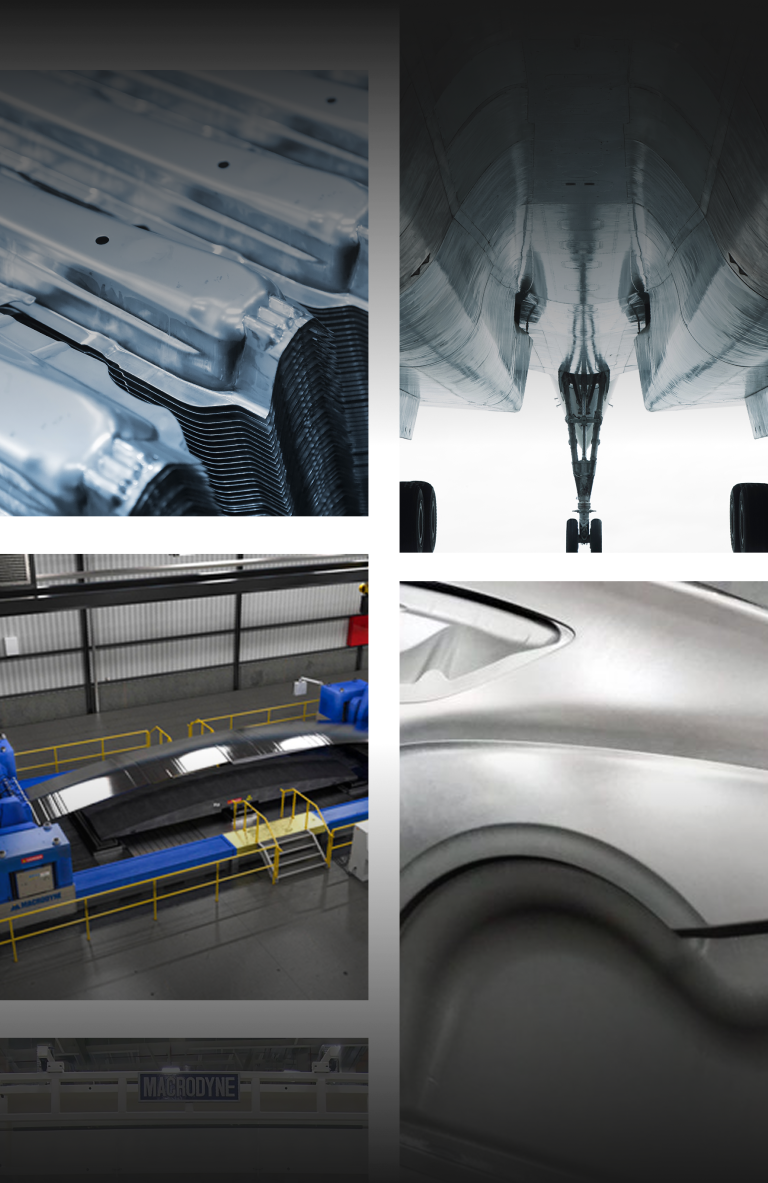

Conventional SPF can form complex aerospace and defense components, but long cycle times can hold production back. Macrodyne’s patented GO-SPF technology uses controlled gas-pressure oscillation to form complex high-performance alloy parts faster, with better process control and fewer compromises.
Talk with Macrodyne to see how GO-SPF could support your next forming challenge.
Want to know whether GO-SPF is a fit for your component, alloy or production target? Share a few details with our team, and we’ll help you evaluate the next step.
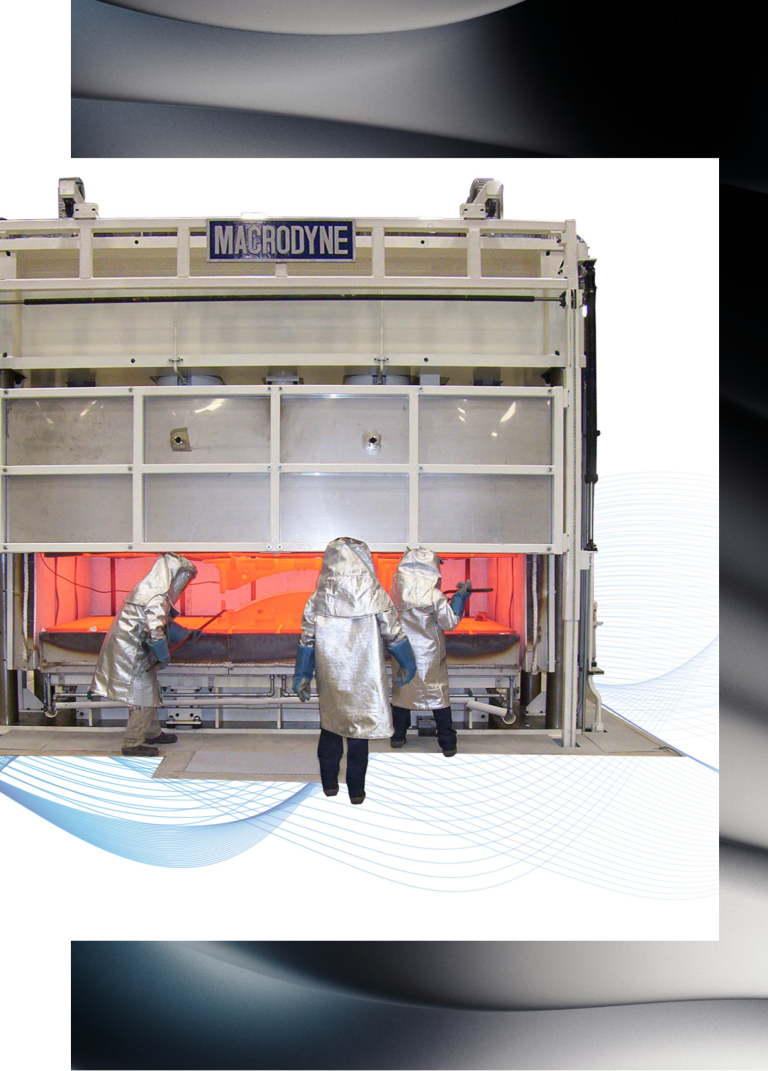
GO-SPF improves the forming environment inside the tool. Instead of relying only on static or slowly changing gas pressure, the process introduces precise gas-pressure oscillations that repeatedly load and relieve the material during forming.
This controlled oscillation helps reduce material stress, improve flow and accelerate forming speeds while preserving the geometry and light-weighting advantages that make SPF valuable in the first place.
For manufacturers forming complex aerospace and defense components, that can mean faster cycles, better process control and more freedom to pursue demanding part designs.
Get the technical guide for engineers, manufacturing leaders and program teams evaluating faster superplastic forming for complex alloy components.
Inside the guide, you’ll find a clear breakdown of how GO-SPF works, where it improves on conventional SPF and what performance data is available for titanium and aluminum forming applications in aerospace and defense.

Aerospace and defense manufacturers are under pressure to produce lighter, stronger and more complex components without adding time to already compressed production schedules. GO-SPF is designed for that environment.
By improving material flow, reducing forming time and supporting better thickness control, GO-SPF gives manufacturers a more practical path to forming complex titanium, aluminum, stainless steel, nickel alloy and other high-performance components used in aircraft, missile, UAV and defense platform applications.

Form complex aircraft structures, titanium panels, engine-adjacent components, thermal shielding and other high-performance formed parts where weight, geometry, repeatability and qualification requirements are closely connected.

Support secure missile, UAV, military aircraft and advanced defense platform programs where production capacity, material integrity, supply-chain confidence and process control are critical to meeting mission-driven timelines.

GO-SPF is not the right answer for every part, alloy or production environment. The best way toevaluate the opportunity is to start with the specific forming challenge in front of you.
Macrodyne can perform a GO-SPF feasibility review to determine whether the process is a strong fit for your component, material, geometry and production goals.
That review can help your team understand where GO-SPF may improve cycle time, thickness control, material flow, energy use, tooling strategy or overall press utilization.

GO-SPF depends on more than press tonnage. The gas oscillation system, tool environment, thermal profile, pressure control, data acquisition and press structure all need to work together.
Macrodyne configures GO-SPF systems around the alloy, part geometry, tool design and production requirements. This application-specific approach helps reduce development risk, support process validation and give engineering teams a clearer path from feasibility to production.
With extensive experience in aerospace and defense programs, Macrodyne also supports the broader qualification environment through ISO 9001:2015 registration, ITAR readiness, CAGE code credentials and NATO-aligned supply capabilities.
O-SPF is Macrodyne’s patented gas-oscillation superplastic forming technology that uses controlled gas-pressure oscillations to form complex high-performance alloy parts faster than conventional SPF. Instead of relying only on static or slowly changing gas pressure, GO-SPF repeatedly loads and relieves the material during forming to improve material flow, reduce stress and support better process control.
GO-SPF differs from conventional superplastic forming by introducing precise gas-pressure oscillations inside the tool environment. This controlled oscillation can help accelerate forming speeds, improve thickness uniformity, increase elongation capability and reduce thermal exposure compared with longer conventional SPF cycles. In qualified applications, GO-SPF can support 200% to 1000% greater manufacturing speeds.
GO-SPF can support complex aerospace and defense components where lightweighting, geometry, repeatability and material integrity are critical. Common application areas include titanium aircraft structures, formed panels, engine-adjacent components, thermal shielding, missile components, UAV parts, military aircraft components and advanced defense platform applications.
GO-SPF is designed for high-performance alloy forming applications, including titanium, aluminum, stainless steel, nickel alloys and other demanding materials used in aerospace and defense production. Macrodyne’s GO-SPF feasibility review can assess alloy suitability, sheet thickness, target gauge range, geometry, forming complexity, surface-finish expectations and production requirements before implementation.
Manufacturers can determine whether GO-SPF is right for their application by starting with a GO-SPF feasibility review. Macrodyne evaluates the component, alloy, part geometry, current cycle time, target cycle time, thickness-control requirements, tooling considerations, production volume and ramp-up needs to identify where GO-SPF may improve forming speed, material flow, energy use or press utilization.
Manufacturers should bring details about the component, alloy, sheet thickness, target gauge range, part geometry, current forming cycle time, target production goals, thickness-control requirements, surface-finish expectations, tooling considerations and expected production volume. These details help Macrodyne assess whether GO-SPF can improve cycle time, material flow, energy use, tooling strategy or overall press utilization for the application.
If conventional SPF is slowing production, limiting part geometry or creating qualification challenges, GO-SPF may give your team a better path forward.
Speak with Macrodyne about a feasibility review for your specific component, alloy and production target.


Copyright © 2026 Macrodyne Technologies Inc. Privacy Policy.
Macrodyne has designed and built many other presses not shown on the website.
80% of our presses are custom designed to meet the specific specification of each client.
Macrodyne has designed and built many other presses not shown on the website.
80% of our presses are custom designed to meet the specific specification of each client.